

By Jock Monteith 8th May 2026
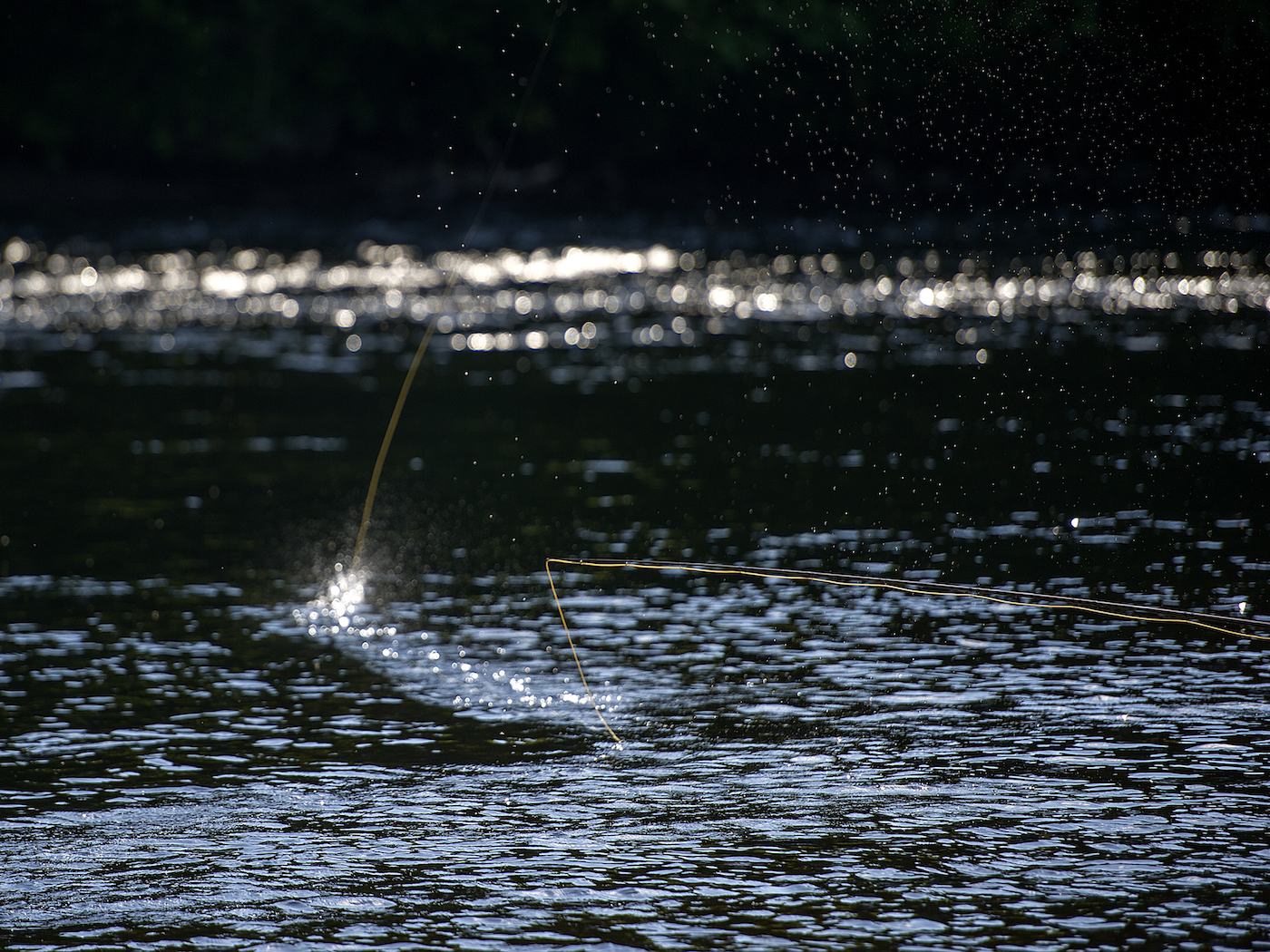
Look at this picture of a completely 'botched' forward delivery power stroke where the fat belly flopping head section of the fly line comes splashing down with barely enough energy to 'turn over' the salmon fly.
This common error isn't made easier to solve with the massive range of 'washing line' Skagit & shooting head fly line systems where all of the casting weight is condensed in a short head length however a 'high' almost invisible rod stop will set the line off at the optimal flight angle of trajectory as clearly the angler who made this bad cast threw the rod at the river!

Let Your Salmon Fly Rod Work For You
If you're going to pay good money for a salmon fly rod with a great casting action then make sure the rod starts paying you back with each delivery of the fly. The action of a Spey rod only comes into play when that forward delivery cast momentum comes to a very brief sudden stop allowing the rod's flexing from the loading of the D Loop to unleash the fly line across the river. Obviously there's a few vital components that must go in before that final point of the cast but this article is only to pinpoint where many anglers get it wrong with their forward power stroke delivery. If you really want your salmon rod action to do the work for you then don't throw your arms and rod at the river which is clearly what happened in this shot and think more about a high precise 'power releasing' rod stop just the same way you'd release a dart at a dart board. This way you can save your arm energy for playing that big beast of a 'sea-licer' that waiting downstream to ambush your fly!

The Forward Delivery Stop & Drop
That high power stroke forward delivery rod stop is 'logically' crucial for setting the fly line off across the river at the 'optimal' angle for distance and not down into the river. The sudden high rod stop I'm recommending must be present in the forward delivery stroke but only for a split second before lowering the rod. The reason for this is simply if you apply the correct high rod stop to unlock the rod's casting action and leave the rod tip high the trailing fly line will often be caught by the fly as it follows the fly line across the river. A high rod stop followed by an immediate dropping of the rod reduces the height of the trailing fly line in the air therefore making it highly unlikely to be caught by the salmon fly as the forward delivery unfolds.

An Almost Invisible Power Stroke Stop
This little power stroke stop I'm referring to is and should be almost invisible to the naked eye as it only requires a spit second tensing of your hands and arm muscles on the butt of the rod to bring out the proper delivery power from the action of your rod. As long as this split second butt stop is present you're letting your rod do its job correctly even though your brain may well be telling you to just throw the rod at the river. A nice split second mid power stroke stopping of the rod butt will put your fly line on the optimal flight path for elegant distance across the river instead of on a collision course flight path prematurely down onto the river's surface.