Jock monteith Salmon Fish Scotland logo
Here's the ultimate Scottish rural pursuit challenge. This is the capture of a perfect River Tay salmon on a fly rod which is easy to say but not easy to achieve without astute tactical awareness, casting skills and patience. This salmon was caught at sunrise by one of our River Tay salmon guide team members during late July.
Here's a perfect cock salmon from the River Tay which was caught in late September near Pitlochry. This adult male salmon is seen here in full Autumn spawning colours which is completely different from their dark grey and silver flanks they have when they first arrive back from feeding in the sea. These creatures and their habits are truly fascinating and booking a personal guide is the most effective way of catching one of these fine Scottish salmon.
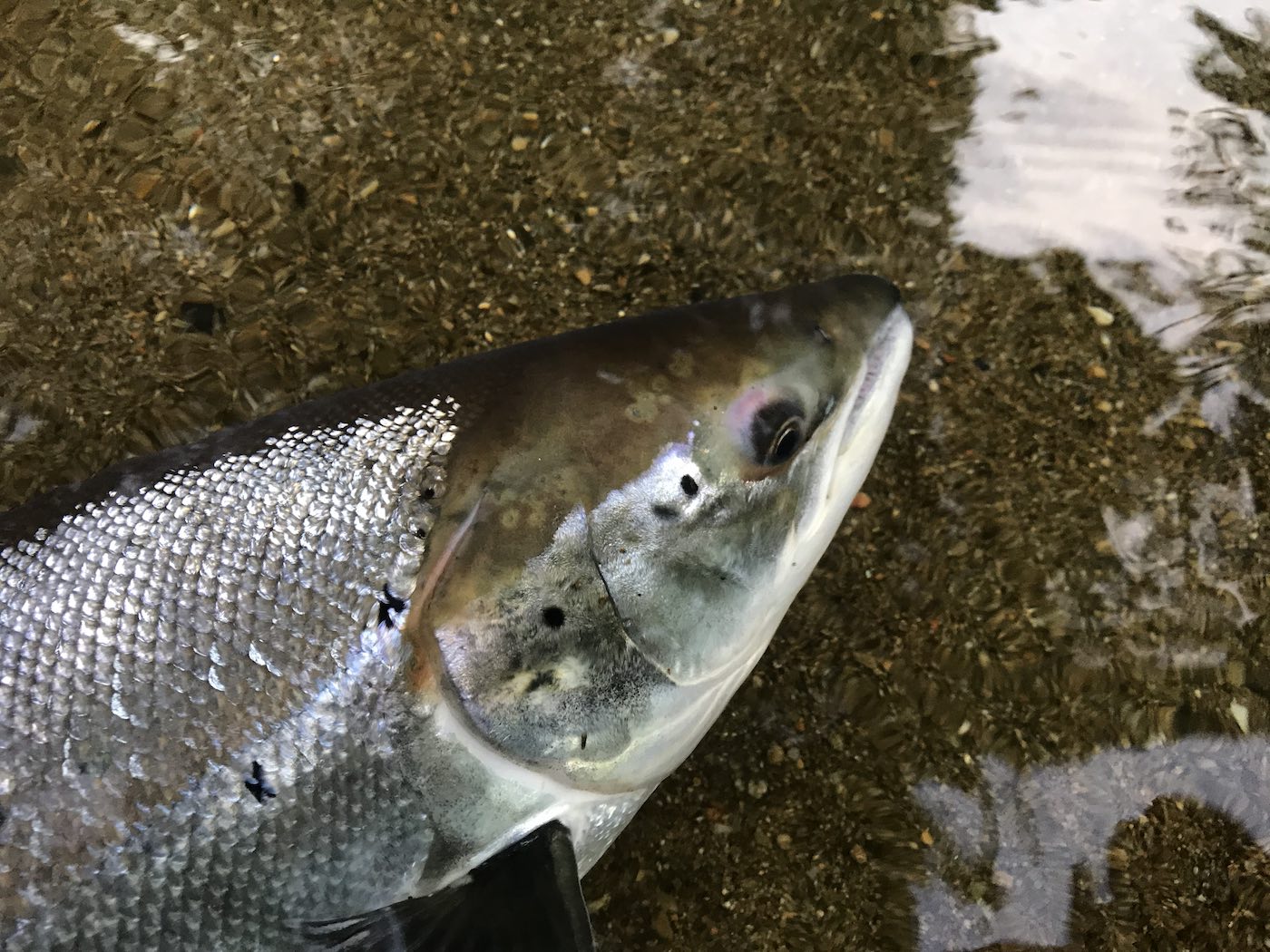
Here's a close up shot of the head of the most sought after marine creature otherwise known as a fresh run Spring salmon. This fine fish was caught in May on the River Tay near the Tummel & Tay confluence which is a renowned holding area for Spring salmon near the Perthshire towns of Pitlochry & Dunkeld.
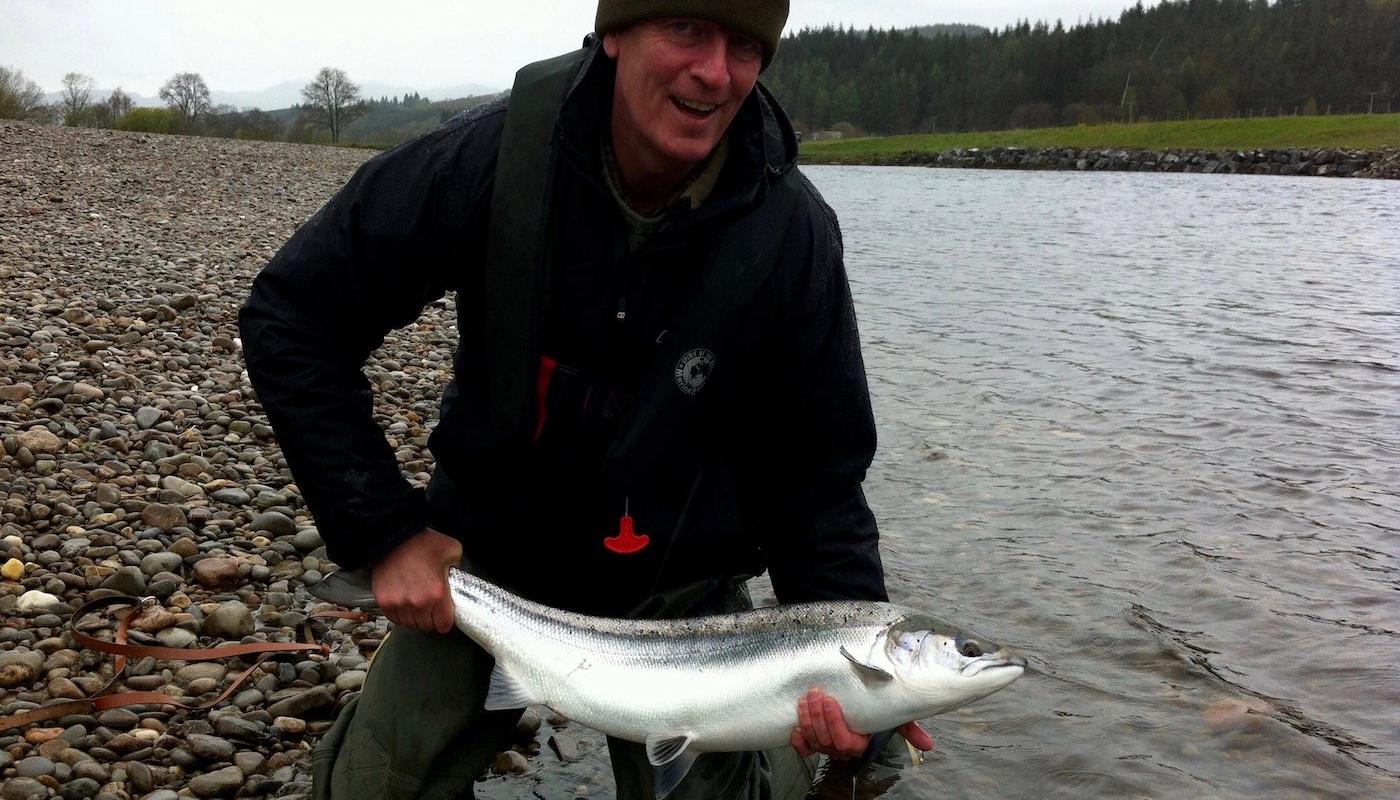
This shot was taken by professional photographer Louise Bellin on the River Tay's Meetings Pool on the Kinnaird Beat while I was serving as the Upper Kinnaird Beat Head Ghillie. My landing net is over my shoulder in anticipation of a pluck on the salmon fly which often occurs in this perfect salmon pool.
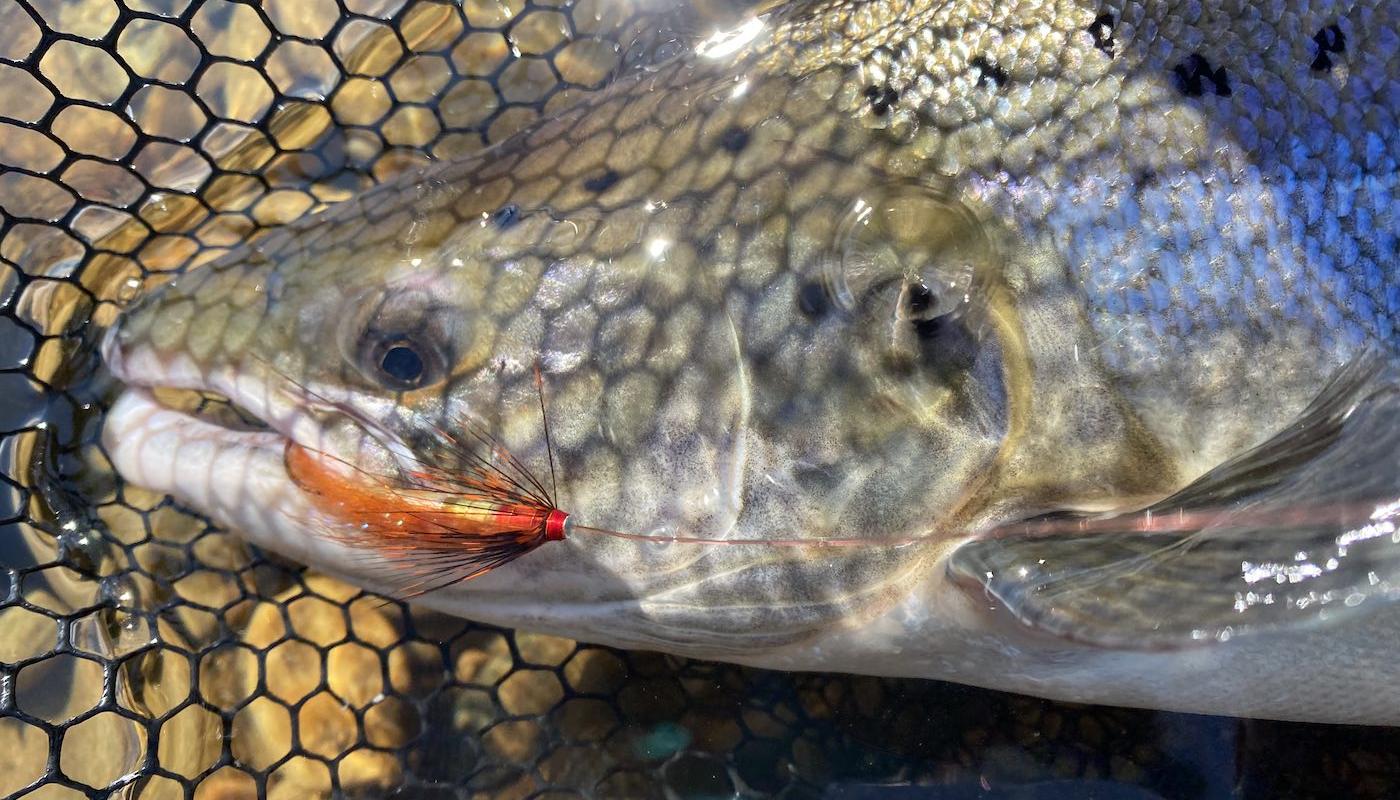
Don't be a 'launch & hope' specialist and adopt salmon fly thought mentality as to your fly's speed & depth as that's what will give you a huge advantage while fishing for salmon anywhere in the world.  This lovely River Tay salmon was caught with a perfectly controlled Jock's Shrimp salmon fly near Dunkeld. This shot was taken while the fish was lying in the landing net prior to unhooking and its safe release back to the river.
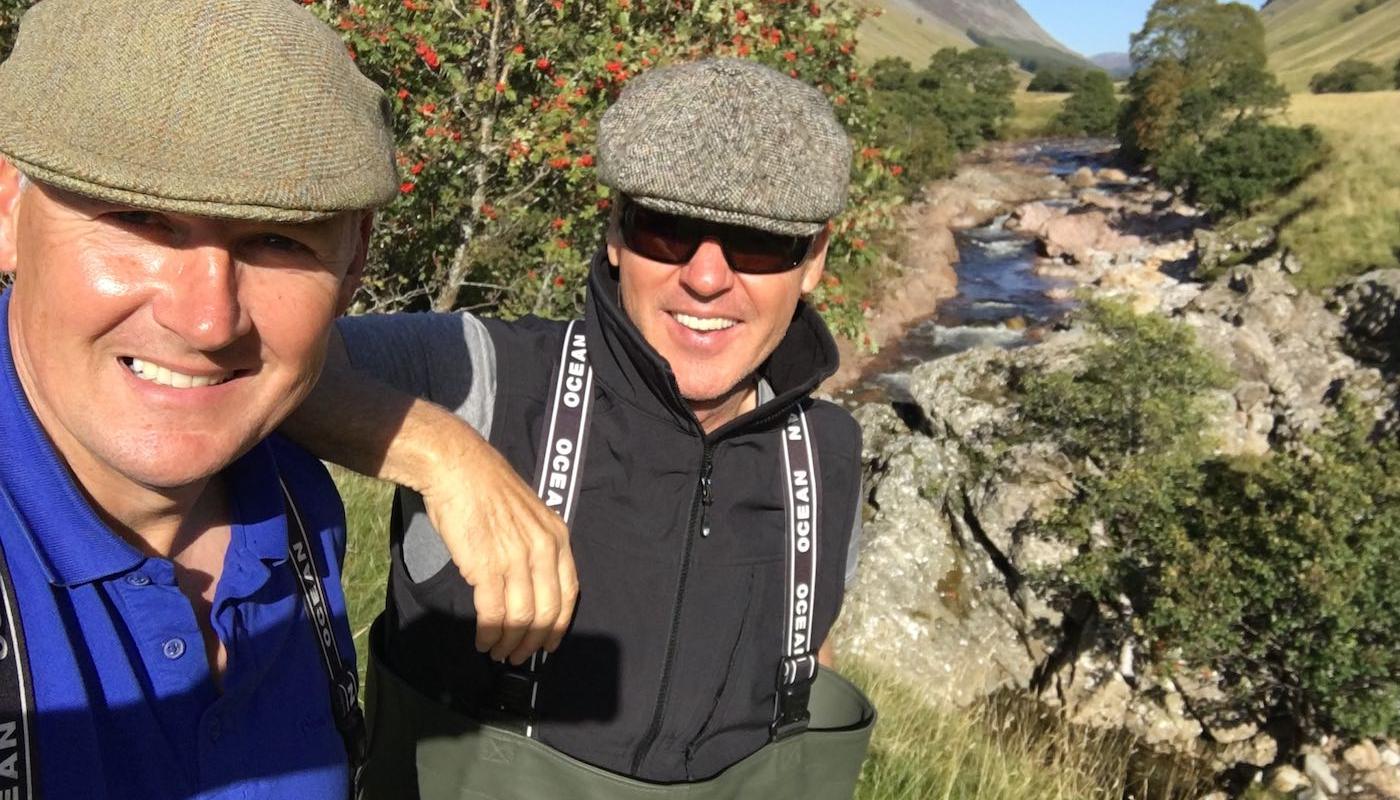
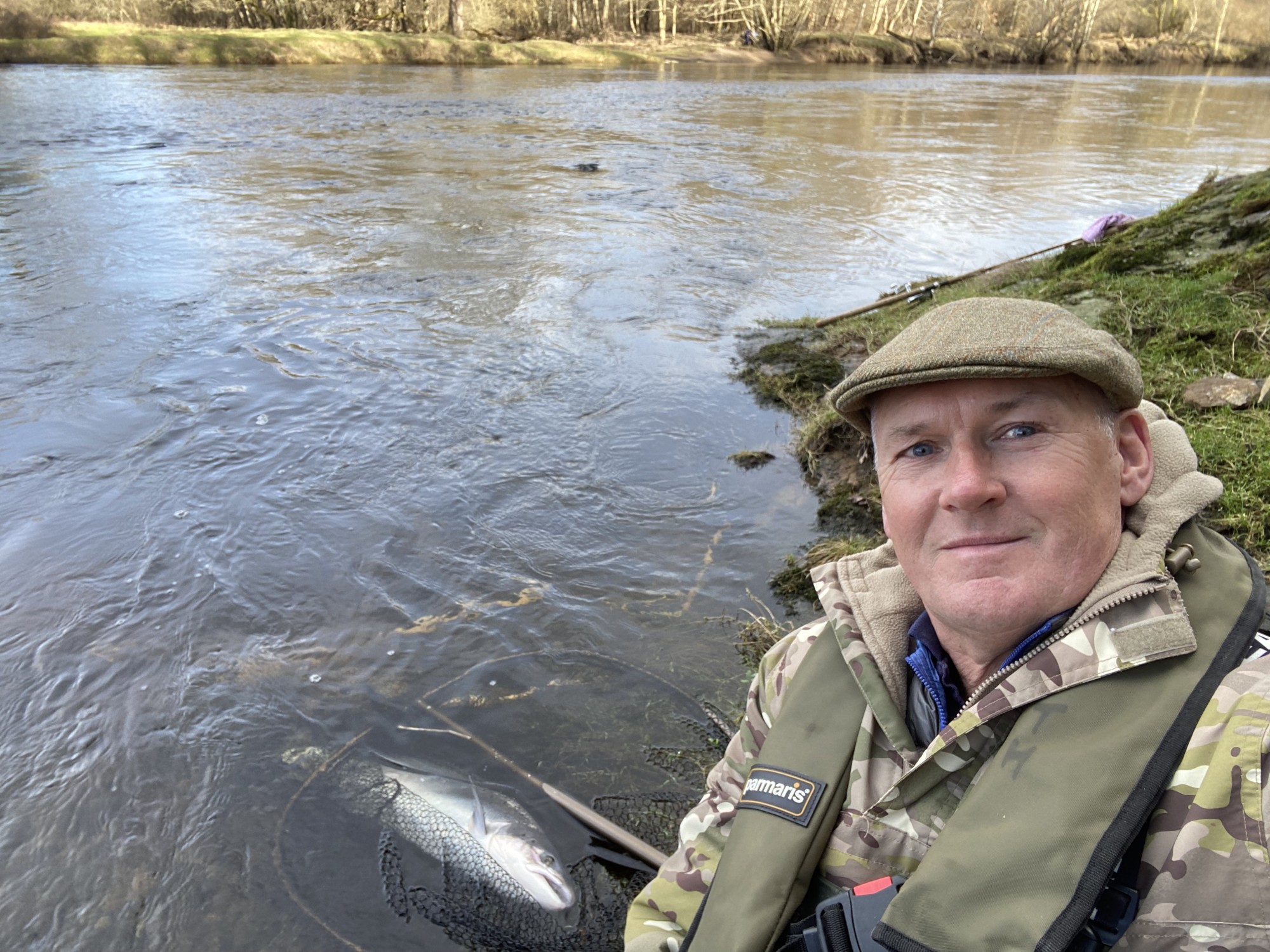
While it's great to return salmon quickly after capture sometimes a salmon will fight so hard it takes it several minutes for it to recover. If you're correctly carrying a landing net like I always do then the recovery task becomes easy as you can just leave the fish in the river margin where there's a steady flow until the fish perks up and is ready for release. This fine February River Tay Spring salmon that I caught on a ABU Toby lure swum off strongly after giving it a few minutes of quality 'hands free' recovery time in the landing net as you can see in my selfie.

Effective Salmon Hooking

By 26th May 2026

The inside of a salmon's mouth is made up of mainly tough tissue which means a salmon hook needs a fair bit of pressure applied to the hook point to set it properly or it will often result in a quick bye bye!

Here's a few points to bear in mind the next time 'Old Sam' visits your fly!

While it's great to return salmon quickly after capture sometimes a salmon will fight so hard it takes it several minutes for it to recover. If you're correctly carrying a landing net like I always do then the recovery task becomes easy as you can just leave the fish in the river margin where there's a steady flow until the fish perks up and is ready for release. This fine February River Tay Spring salmon that I caught on a ABU Toby lure swum off strongly after giving it a few minutes of quality 'hands free' recovery time in the landing net as you can see in my selfie.

The End Product Of A Landed Salmon

What's the point of going through the 'learning curve' of salmon fishing tactics and optimising your water coverage plus the expense of buying salmon fishing equipment if you're not going to maximise the opportunities to hook salmon as they arise. You'd be surprised just how many anglers fail in the very basic procedure of how to set a hook properly so here a few pointers that should set your mind thinking.

Don't be a 'launch & hope' specialist and adopt salmon fly thought mentality as to your fly's speed & depth as that's what will give you a huge advantage while fishing for salmon anywhere in the world.  This lovely River Tay salmon was caught with a perfectly controlled Jock's Shrimp salmon fly near Dunkeld. This shot was taken while the fish was lying in the landing net prior to unhooking and its safe release back to the river.

Self Setting Salmon Hooks

Do you think that when a salmon takes and turns on a fly that a 'little green genie' appears from the hook with a big mallet and knocks the hook home for you or that all hooks these days have a 'built in' mini explosive charge that detonates to drive the hook home when it comes in contact with salmon mouth tissue! None of the above are obviously true however I can assure you that all hooks 'logically' require sufficient pressure to be set to ensure the fish stays on!

This shot was taken by professional photographer Louise Bellin on the River Tay's Meetings Pool on the Kinnaird Beat while I was serving as the Upper Kinnaird Beat Head Ghillie. My landing net is over my shoulder in anticipation of a pluck on the salmon fly which often occurs in this perfect salmon pool.

Letting The Salmon Take Develop

Don't be fooled by a salmon 'take' or try to convince yourself that the 2 gentle taps you just received were only a trout which disappeared when you lifted the rod! Have the composure to do absolutely 'nothing' if any suspicious knocks on the line are felt as often the biggest salmon's take will start ever so subtly. So the 'mantra' for your head while salmon fishing is 'do nothing' and if you've a habit of reacting too quickly to salmon then just repeat these 2 simple words over and over and over again while you're fishing until you've completely brainwashed yourself to do just that!
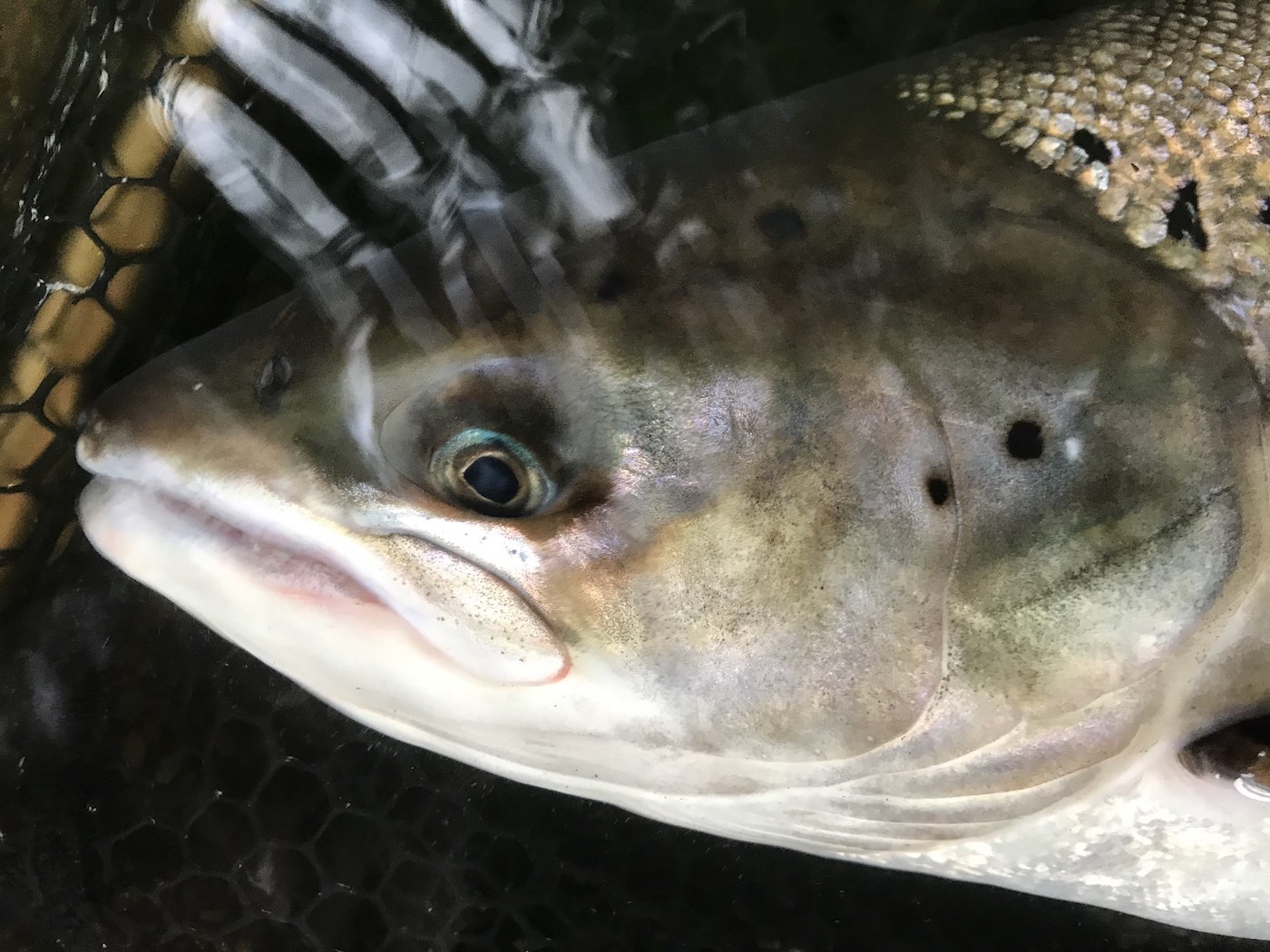
Earn a close up inspection of one of Neptune's finest creatures via some astute professional salmon guide input on one of Scotland's finest salmon fishing venues. Look at the lovely head markings of this fresh run River Tay salmon as it lay in the landing net.

Making Sure The Salmon Has Turned

If you can acquire the necessary composure to let those initial tugs from a salmon develop into a lovely positive steady draw of line from your fly reel then you'll know the salmon has 100% turned and that only then is the time to react. The problem with a salmon take is and always has been 'adrenalin' which artificially speeds up your perception of time! When working as a ghillie on the Tay I noticed the 'take to landed salmon ratio' increased significantly after issuing all salmon fishing guests with a large mandatory Macallan on arrival in the morning!

Book a professional River Tay salmon guide to show you how to place one of these special fish in the landing net and apply your salmon fight footage to Youtube! Look at the deep set build of this perfect salmon as it lies in the landing net before its release back to the river. This perfect fish was caught by one of our fortunate salmon fishing trip guests during the month of May.

Setting The Salmon Hook Properly

The best method I've personally found to put the 'brakes' on a salmon that's turned on the fly is by keeping the rod tip down and pointed in the general direction of the fish and clamping the fly reel face until the weight of the fish is felt for at least 2 or 3 seconds. That will set the hook properly every time regardless of whether the micro hold of the hook point was initially positioned in tough or softer tissue within the salmon's mouth as all that's between your hook point and your fly reel is the 'negligible' braid core stretch of your fly line and nothing else. If you follow the masses and the 'just lift into it' theme you'll more often than not be disappointed by the slack line that frequently follows! Logic should tell you that the softish 'lift' action of a salmon fly rod and a lightly set reel clutch is unlikely to ever give you adequate hook point pressure to set the hook properly.

Here's a close up shot of the head of the most sought after marine creature otherwise known as a fresh run Spring salmon. This fine fish was caught in May on the River Tay near the Tummel & Tay confluence which is a renowned holding area for Spring salmon near the Perthshire towns of Pitlochry & Dunkeld.

Slow Down When A Salmon Takes

Take your time when a salmon takes your fly as when you've allowed that fish to turn you've already achieved a 'micro hook hold' somewhere in the salmon's mouth and the line drag from the flow of the river on your fly line will be keeping everything reasonably taught as the fish peels line off your reel. Visualising the river angle of the salmon at this point should tell you that the fish is now moving away from you (with forward momentum) so if you apply the 'brakes' with the rod parallel to the surface of the river and pointing towards the fish then there's only one thing that can occur and that is totally 'effective' hook point pressure which will set the hook properly in the salmon's mouth where it's never coming off! 


More Salmon Fishing Articles