Jock monteith Salmon Fish Scotland logo
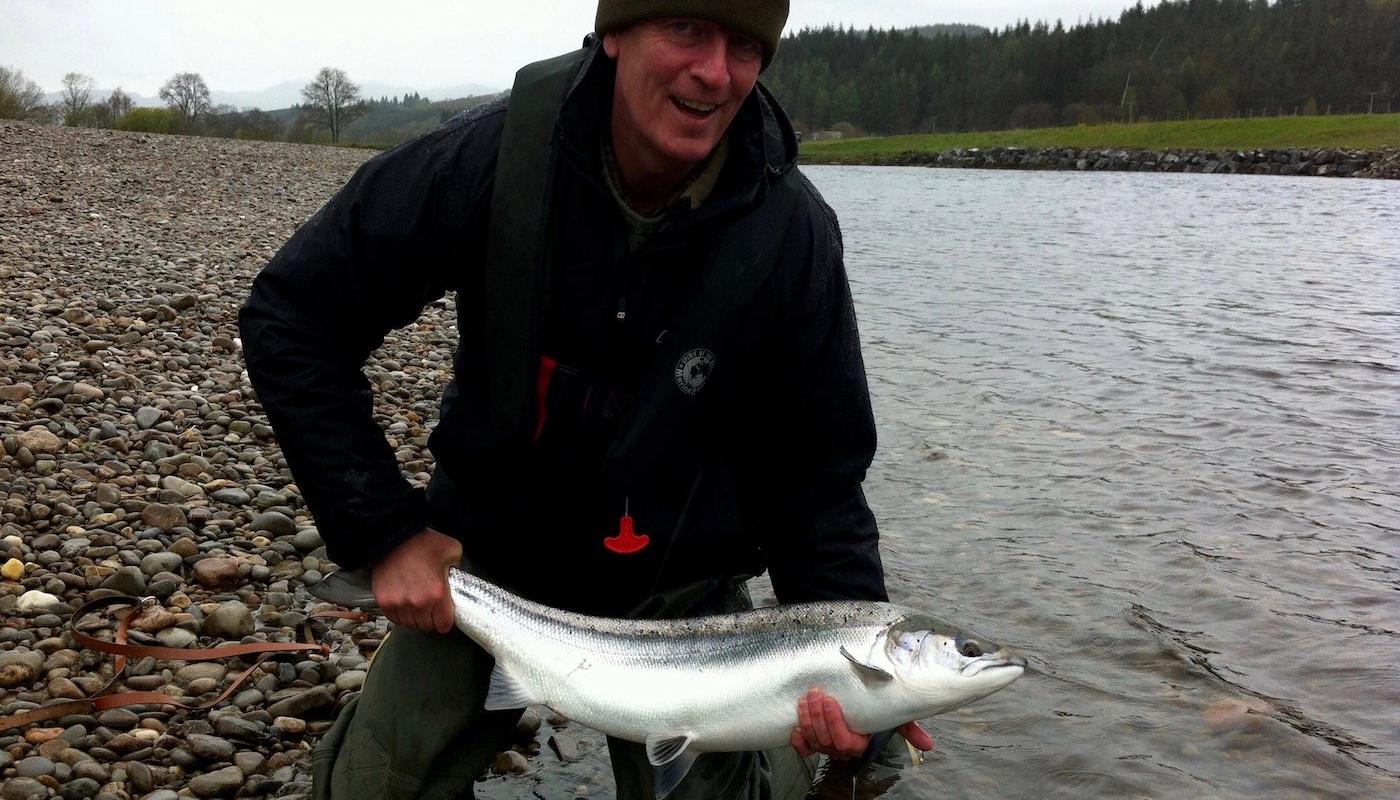
Here's a perfect cock salmon from the River Tay which was caught in late September near Pitlochry. This adult male salmon is seen here in full Autumn spawning colours which is completely different from their dark grey and silver flanks they have when they first arrive back from feeding in the sea. These creatures and their habits are truly fascinating and booking a personal guide is the most effective way of catching one of these fine Scottish salmon.
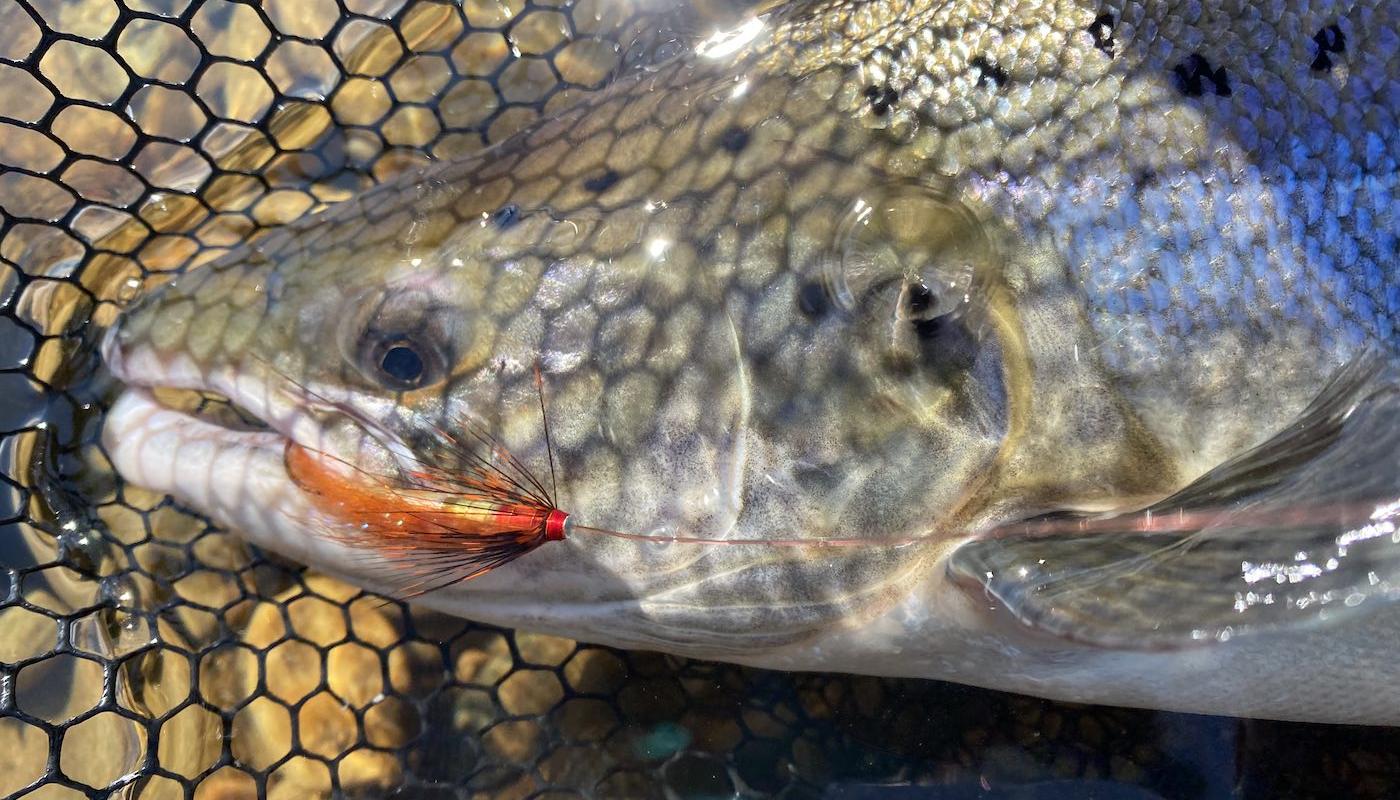
This is the brown winged version of the Jock's Shrimp fitted with a Partridge Nordic No 6 tube fly hook. This is a true weapon of a salmon fly and lethal for attracting salmon on the famous River Tay and other Scottish salmon rivers.
A heart racing close up inspection with one of these fine Atlantic salmon and will remain in your memory banks for an entire lifetime. This perfect Summer salmon came to a deadly Jock's Shrimp salmon fly and was caught near to the River Tummel/Tay confluence which is located not too far away from Pitlochry in Perthshire. Note the fish friendly fine mesh of the landing net behind the salmon.
Personally I love to use the Partridge Nordic tube fly hooks as they are micro barbed, very sharp and very strong. A single hook also hooks salmon better and does almost no damage to the mouth of a fish with 'Catch & Release' in mind. A good strong single hook also keeps the fly on an even keel when it's fishing. Once you've landed a few salmon on a single hook you'll be unlikely to ever go back to doubles or treble hooks. These are 3 Jock's Shrimp salmon tube fly patterns which is of my own design.
If you get rid of the soft rubber sleeves that most tube flies come with and replace them with rigid plastic sleeves they will result in more solid hook sets as the hard version don't pivot and keep the hoof straight while being set by the angler. It's fairly tricky to fit a hard plastic sleeve but some patience and a bit of heat will do the job. This is a Jock's Shrimp tube fly which I tied on a copper tube fly body.
Look at this perfectly tied Jock's Shrimp salmon fly that's been tied with soft 'movement inducing' materials like Arctic fox. When a fly like this is swum in the stream these fine fibres come alive and make the fly move like a live creature therefore making them much more effective than other stiffer fly tying materials.

Fishing A Salmon Fly

By 23rd July 2026

There's far more to Scottish salmon fishing than simply launching your salmon fly out into the river and 'hoping for the best' as the current swings your fly back towards the riverbank.

If you develop a sense of 'fly awareness' when you're salmon fishing your success levels will increase significantly and I'll elaborate here in what I mean by that.

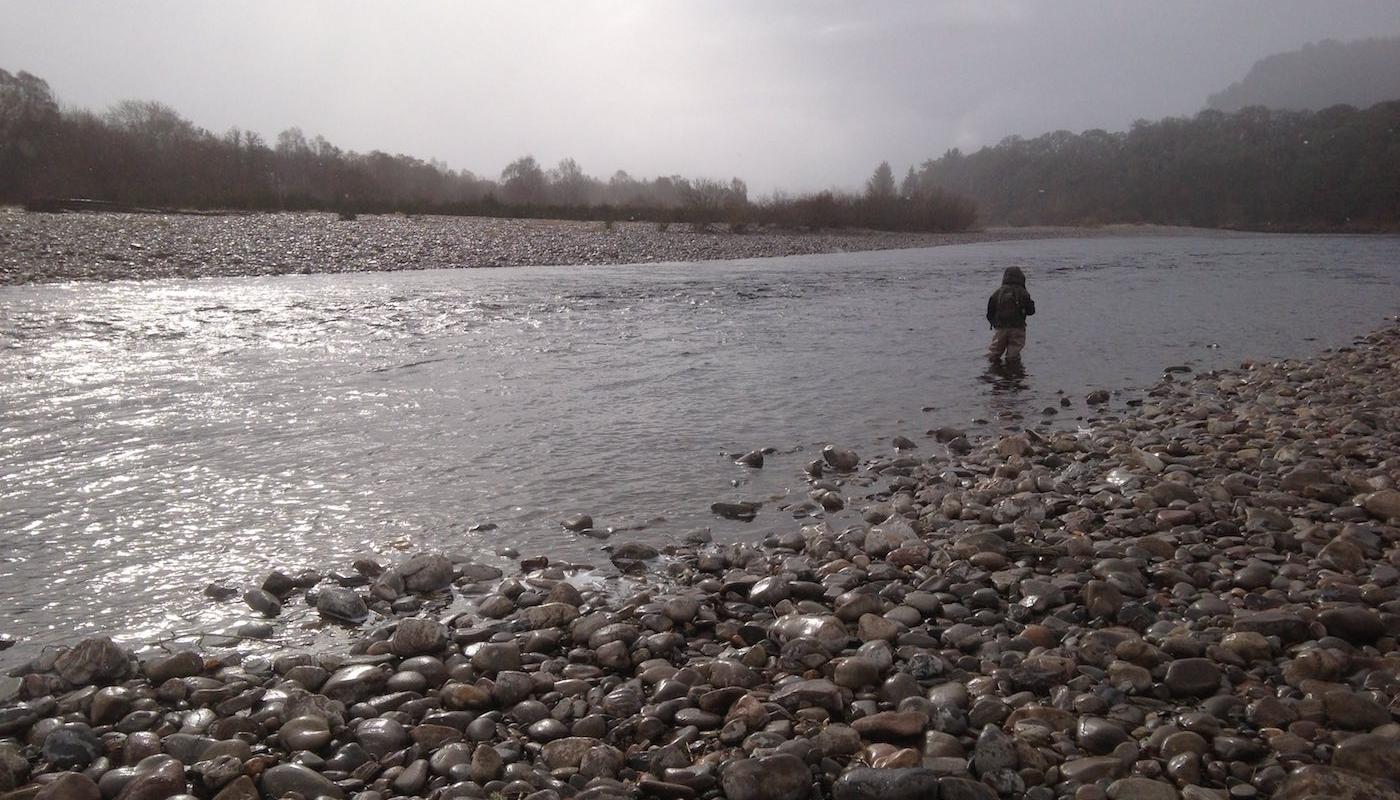
The Tay tributary River Tummel is a renowned Spring salmon fishery. This salmon fishing holiday guest is working his way down though the Green Bank Pool on the Lower Tummel Beat which is located at Moulinearn near Pitlochry under the supervision of his professional salmon fishing instructor.

Working Your Salmon Fly

It's important that you keep in mind the basic objective of what you're trying to do with a fly when you present it to the river. You're trying to replicate the stream movements of a 'live' creature that pulses, waggles & darts in an attempt to trigger a predatory instinct from a salmon that's not primarily in the river to feed. A boring lifeless swing of the fly may sometimes catch you the 'easy fish' but the swim style you should be trying to create should allow you to entice the oldest most educated salmon in the pool (that's seen all) to have a go!

Here's a group of salmon fishing holiday guests testing out their newly learned Spey casting and riverbank movement techniques on the left bank of the River Tay's Cottar Pool on the Newtyle Beat. This perfect green grassy bank makes a perfect salmon pool for teaching salmon fishing guests.

The Movement Of A Salmon Fly

With that in mind you should swim your fly at the edge of the river on a short length of leader to observe it for natural movement before you even begin fishing with it and don't fish it if it has none. When the relevance of this obsession really hits home you'll not fish a fly that doesn't move well as you'll have witnessed the added attention salmon will give to a fly that has natural movement of its own. This is the starting point of the thought process that will ultimately turn you from a salmon fly fisher to a salmon hooking machine!

Don't be a 'launch & hope' specialist and adopt salmon fly thought mentality as to your fly's speed & depth as that's what will give you a huge advantage while fishing for salmon anywhere in the world.  This lovely River Tay salmon was caught with a perfectly controlled Jock's Shrimp salmon fly near Dunkeld. This shot was taken while the fish was lying in the landing net prior to unhooking and its safe release back to the river.

Why The Depth Of Your Salmon Fly Is Important

The next train of thought is to work out where in the water column you think salmon are holding then adjust your fly line's sink tip to sink your fly into that zone accordingly. Of course a fresh run easily caught salmon that's still in a state of excitement from its arrival into fresh water will come 10ft or more to intercept a fly but with salmon that have been in the river a while you'll normally need to get your fly right onto their noses to achieve the desired reaction.

Here's the double handede salmon Spey rod being held out and high across the fast stream at the Guay Pool on the Lower Kinnaird Beat of the River Tay near Dunkeld. This method is how you control your salmon fly at long range which is a rare skill seldom understood by the majority of new salmon fishers. A professional salmon fishing guide will teach these vital fly fishing skills.

Control The Speed Of Your Salmon Fly

Once you've made the adjustments for selecting a fly that moves correctly and is fishing through the pool at the correct depth it's then a case of making sure the speed of your fly is matching the prevailing water conditions. In fast water a high rod tip following an upstream mend will pace your fly correctly as will a square cast and downstream mend in a slow moving pool. There are so many differing permutations of what pace of fly will gain the best results that it often pays to experiment and don't be afraid to experiment if the 'correct' speed isn't working.

This perfect salmon fly was designed by myself on the River Tay 20 years ago and is an absolute salmon magnet when fished properly. Many experienced salmon anglers swear by the effectiveness of this pattern and it's sometimes wrongly referred to as the Newtyle Shrimp however it's proper registered name is the Jock's Shrimp as a credit to its creator. Here are the exact dressings for this deadly Scottish salmon fly pattern; 
Hook / Tube: as required
Thread / Silk: Uni Thread 6/0 or 8/0, Red
Tag / Butt: Oval silver as for Rib
Tail: Orange Arctic Fox or equivalent with pearl flashabou accent or mirage over, just 2 or perhaps 3 strands max.
Tying note: it's important to set the Tag / Butt in place first, this helps lift the Fox tail slightly, increases movement and helps avoid

When To Adjust The Pace Of The Salmon Fly

My own thoughts on fly pace are to fish a slower steady paced salmon fly through the colder water of Spring but not too deep until the end of April when I'll sink the fly down a bit deeper. Up until mid April salmon are usually found holding in the upper areas of the water column where the warmer thermals are located. In the Summer I'll usually fish either a faster higher positioned fly in the shallower steams before going deep again for bottom holding fish through the milder river water of Summer. My Autumn tactics are the deepest of the entire season as most Autumn salmon will hold at the bottom of the pool and will have seen many flies so getting right down onto them is very important for one to cooperate.

Look at this perfectly tied Jock's Shrimp salmon fly that's been tied with soft 'movement inducing' materials like Arctic fox. When a fly like this is swum in the stream these fine fibres come alive and make the fly move like a live creature therefore making them much more effective than other stiffer fly tying materials.

Create Additional Movement In Your Salmon Fly

Introducing both subtle and unsubtle 'completely unpredictable' nudges or added fly movement created by the rod tip via wrist flicks and draws as the fly fishes will also separate your salmon fly from the movement of others that they've seen. Create a salmon fly movement technique that encompasses all of the above and if you do you'll gain far more attention from salmon than a non 'sub-surface' fly fisher will ever achieve. On many occasions I've literally forced older resident salmon to at least have a 'nudge' at the fly with a bit of fly movement work and thought as described above. If you're not already tuned into these points have a go and let the salmon advise you that they agree with what I've just said the next time you're out on the river when they're playing 'hard to get'!


More Salmon Fishing Articles