Jock monteith Salmon Fish Scotland logo
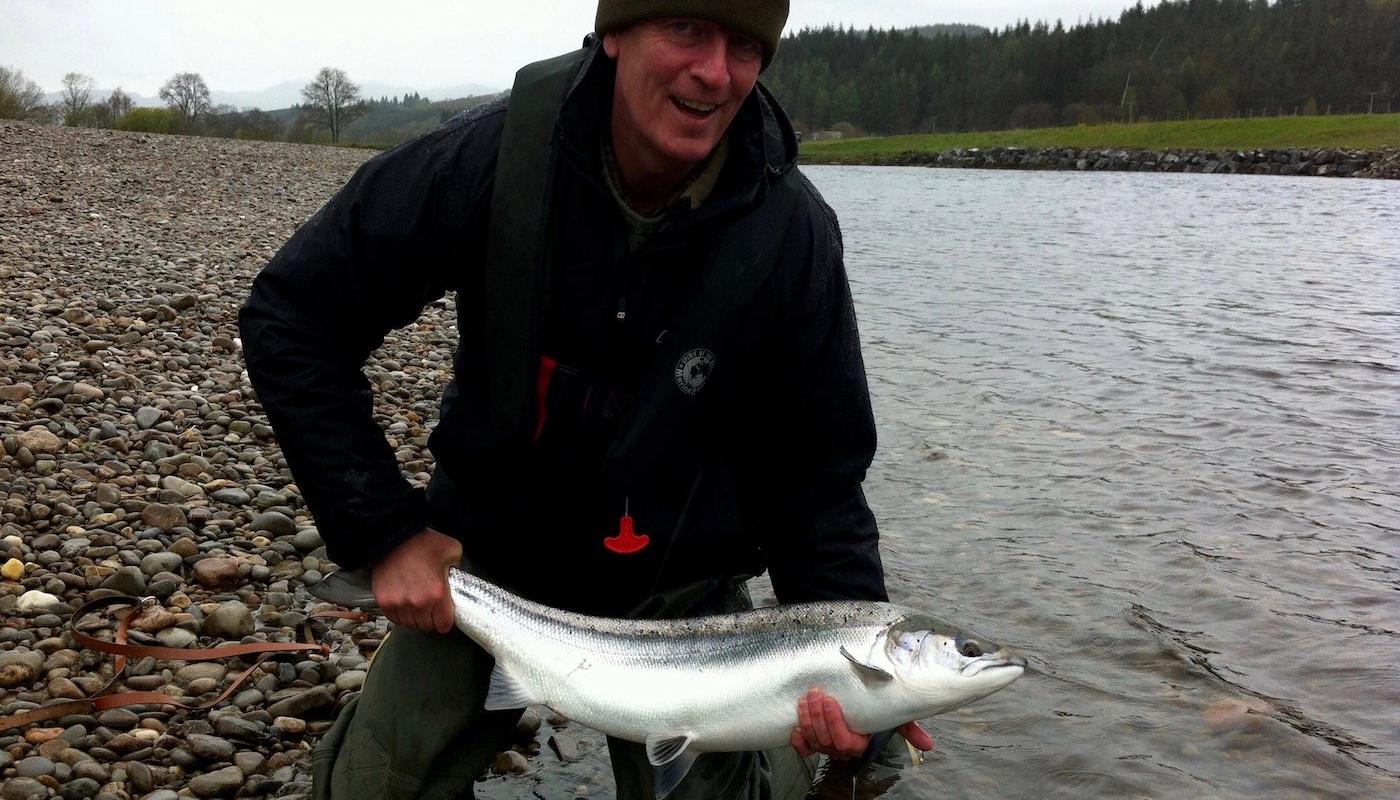
This perfect 20lbs salmon was caught at the Kindallachan Pool neck on the Lower Kinnaird salmon beat during June while working as a salmon guide. I had my lucky Tweed jacket on that day which has been a magnet for salmon for decades on the Tay. Perfect salmon encounters like this stay in your memory banks for life even though a more accurate account of the capture lives on Youtube! My Tweed jacket and my Ocean chest waders are never too far away when I'm near a salmon river.
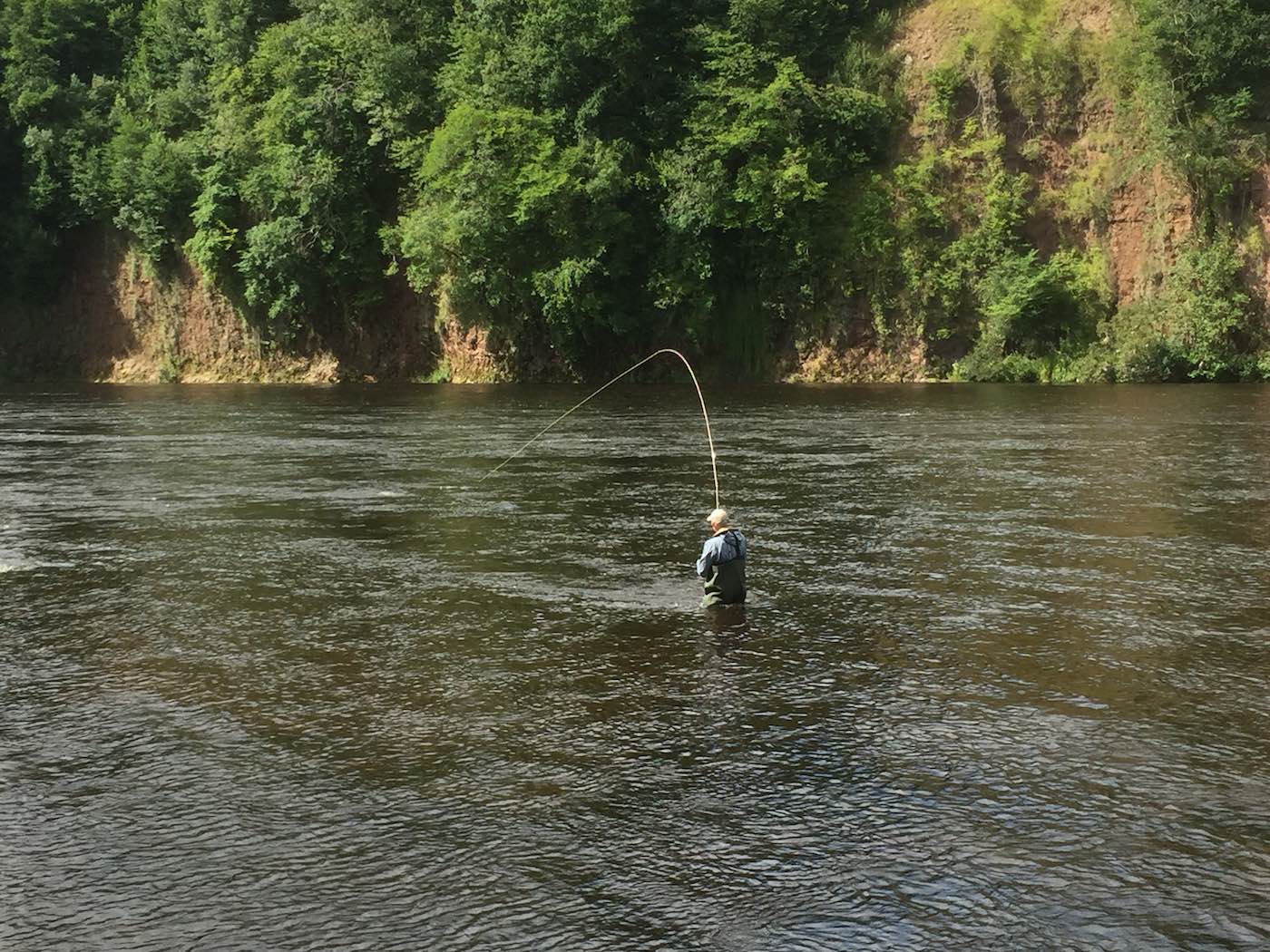
It's always best to try to get side on to a salmon when playing the fish. This salmon fishing holiday angler was playing this fish on the River Tay near Dunkeld. This salmon managed to get well below this salmon fisher which is not best practice as a side on position brings the fight to a far earlier close.
When playing a salmon it's important to ease off the rod pressure if you see you're fly line rising and anticipate a jump. If a fish does jump like this simply drop your rod so the fish cannot get a bang at the taught mainline with it's tail which could dislodge your hard earned salmon fly hook hold. I took this photo while serving as a salmon fishing guide on the River Tay near Dunkeld as my salmon fishing guest was plating this fine salmon.
Here's one of our many guided salmon fishing guest playing 1 or 5 perfect lower River Tay salmon during July. A high rod tip like you see here is important when playing salmon to offset sudden jumps or surges and to keep the fly line high in the water column away from potential snags. Look at the lovely red sandstone cliffs on the far bank of the Tay.
Here's Alan Rennie playing one of 5 Spring salmon he caught that with myself as his salmon guide in the boat that day. Look are the riverbank where there's no leaves on the trees yet there's some beautiful sunlight which just gave the surface of the water of the river enough warmth to get these fish on the move and in a 'taking' frame of mind. This photo was taken in the Cottar Pool on the Newtyle Beat of the River Tay.

Playing A Scottish Salmon

By 13th May 2026

Once you've mastered the art of how to fish effectively down through a salmon pool it is very important that you master the art of effectively playing a salmon too.

There's a few important factors to keep in mind once the excitement of the initial contact is under control and you're ready to play your fish. Normally the initial take from a salmon will come 'out of the blue' to catch you off guard so early composure is very important.


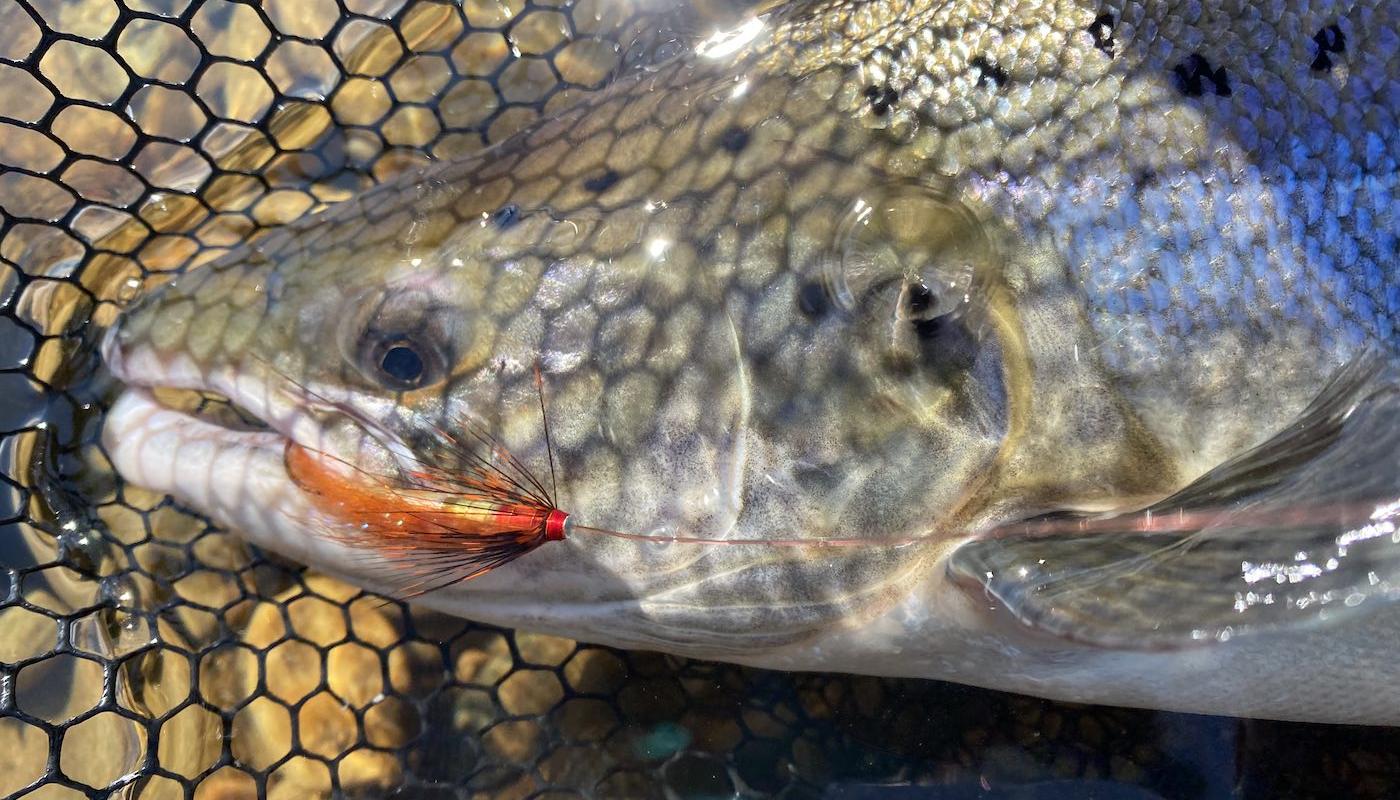
When you hook a salmon it's important to know how to play the fish properly to gain control of proceedings. This perfect Spring salmon was caught on the middle area of the Tay during early June and is typical of the quality of fish found in the Scottish rivers at that time. The fly in this salmon's mouth is the deadly Jock's Shrimp salmon fly pattern.

How To Effectively Hook A Salmon 

Reacting to a salmon take too early accounts for thousands of lost opportunities each year on the salmon rivers of Scotland so it is important that you wait until you start to think you've almost given the salmon too long before you clamp the reel face with the rod tip down and pointing in the direction of the fish to set the hook. Only after you've briefly felt the salmon's weight for a few seconds ensuring the hook is set 'properly' should you ever lift the rod. 
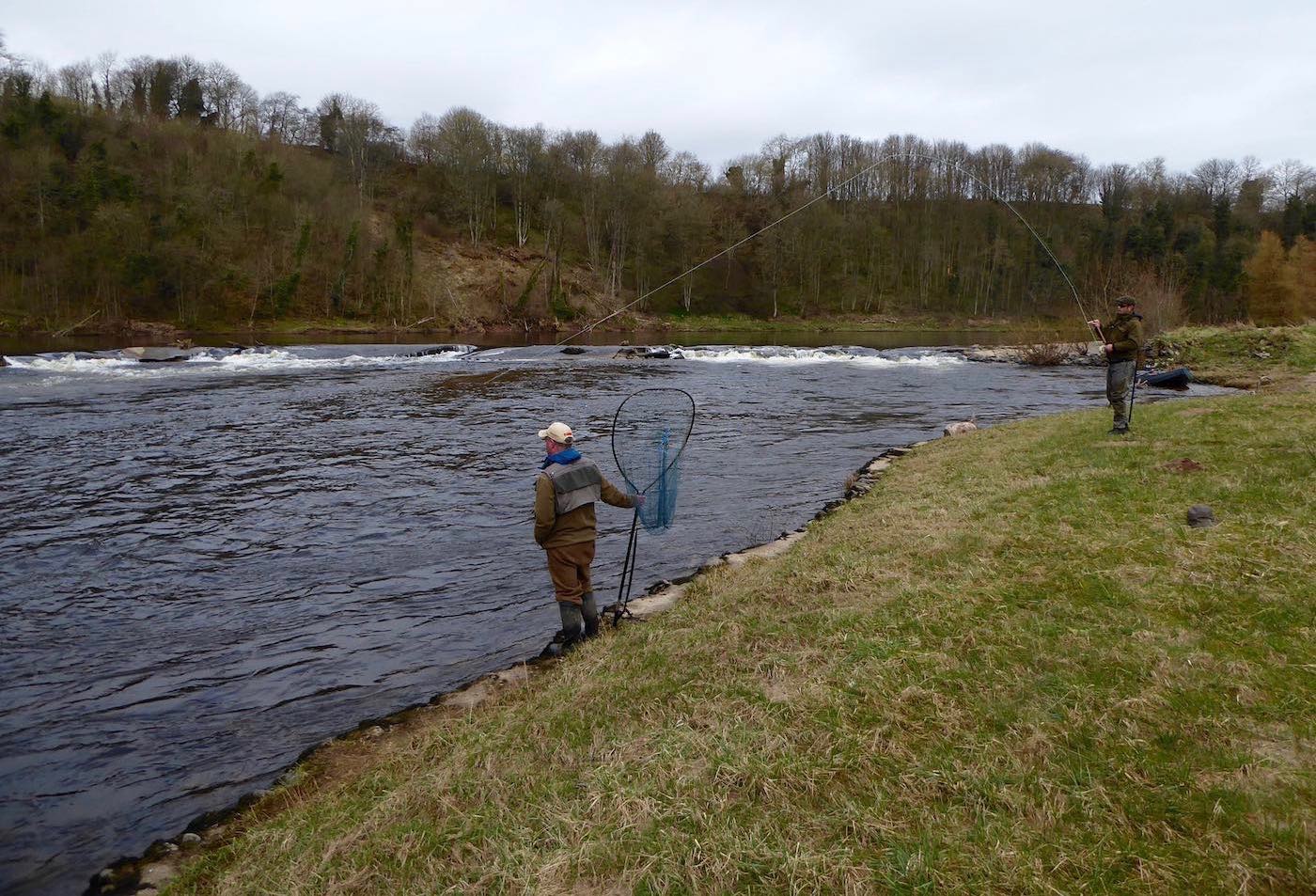
A salmon fisher playing a salmon on the lower River Tay near Stanley in Perthshire. Staying side on to the fish is the best approach if the riverbank & salmon permits this tactic. You can see the River Tay salmon guide at the ready with the landing net and the salmon fishing holiday guest positioned high up on the riverbank for maximum height advantage over the salmon.

Why To Keep A High Salmon Rod Tip When Playing A Salmon

Now that the hook has been set effectively your rod tip must remain high throughout the fight. This high rod position assures steady pressure on the salmon with the added cushioning effect should the salmon bolt suddenly. This high rod position also keeps your fly line away from any subsurface obstacles which could snag your fly line so never let the rod tip drop when you're playing a salmon. I completely cringe every time I see a fish being played with a low rod tip giving the fish the advantage of a quick sharp unexpected direct pull at the hook hold which they can be good at! Avoiding a drowned line is important although it's sometimes difficult especially with a shorter rod and a bulky shooting head style fly line that's difficult to lift clear of the river surface due to excessive line drag.

Here's one of our many guided salmon fishing guest playing 1 or 5 perfect lower River Tay salmon during July. A high rod tip like you see here is important when playing salmon to offset sudden jumps or surges and to keep the fly line high in the water column away from potential snags. Look at the lovely red sandstone cliffs on the far bank of the Tay.

Following Your Salmon Downstream

If your salmon takes off downstream at any point in the fight it is important that you follow it to regain a 'side on' fight position if at all possible. If you try to play a salmon that is way below you then you'll be playing the weight of the river too and all the hook hold pressure will also be directed out of the fish's mouth instead of into it which can often result in the loss of the salmon. You don't really want a hooked fish way downstream of your riverbank position as it shakes its head left to right (and the hook set angle!) in an attempt to get rid of your fly. If however the riverbank terrain doesn't permit you to follow your fish a steady gently applied pressure may just coax it back upstream to where you want it to be.

When playing a salmon it's important to ease off the rod pressure if you see you're fly line rising and anticipate a jump. If a fish does jump like this simply drop your rod so the fish cannot get a bang at the taught mainline with it's tail which could dislodge your hard earned salmon fly hook hold. I took this photo while serving as a salmon fishing guide on the River Tay near Dunkeld as my salmon fishing guest was plating this fine salmon.

Salmon Fishing Fight Pressure

When playing your fish take your time and just release your fly reel when the salmon starts to pull away and draw line back onto the reel when the fish eases off its pressure and eventually this will tire the fish out. While you are playing your salmon always be scanning for a suitable slow flow, deep 'snag free' area of the pool to land the fish in. Never try to play a fish in fast or shallow water as both will give you very little control of the salmon in the latter stages of the fight when full control is important for the effective landing of your fish. A wet 'pre-sunk' landing net can then just simply be lifted as your fish is drawn over it so there's no need to chase a fish about with the net if you wait for the right moment to land it.


More Salmon Fishing Articles