Jock monteith Salmon Fish Scotland logo
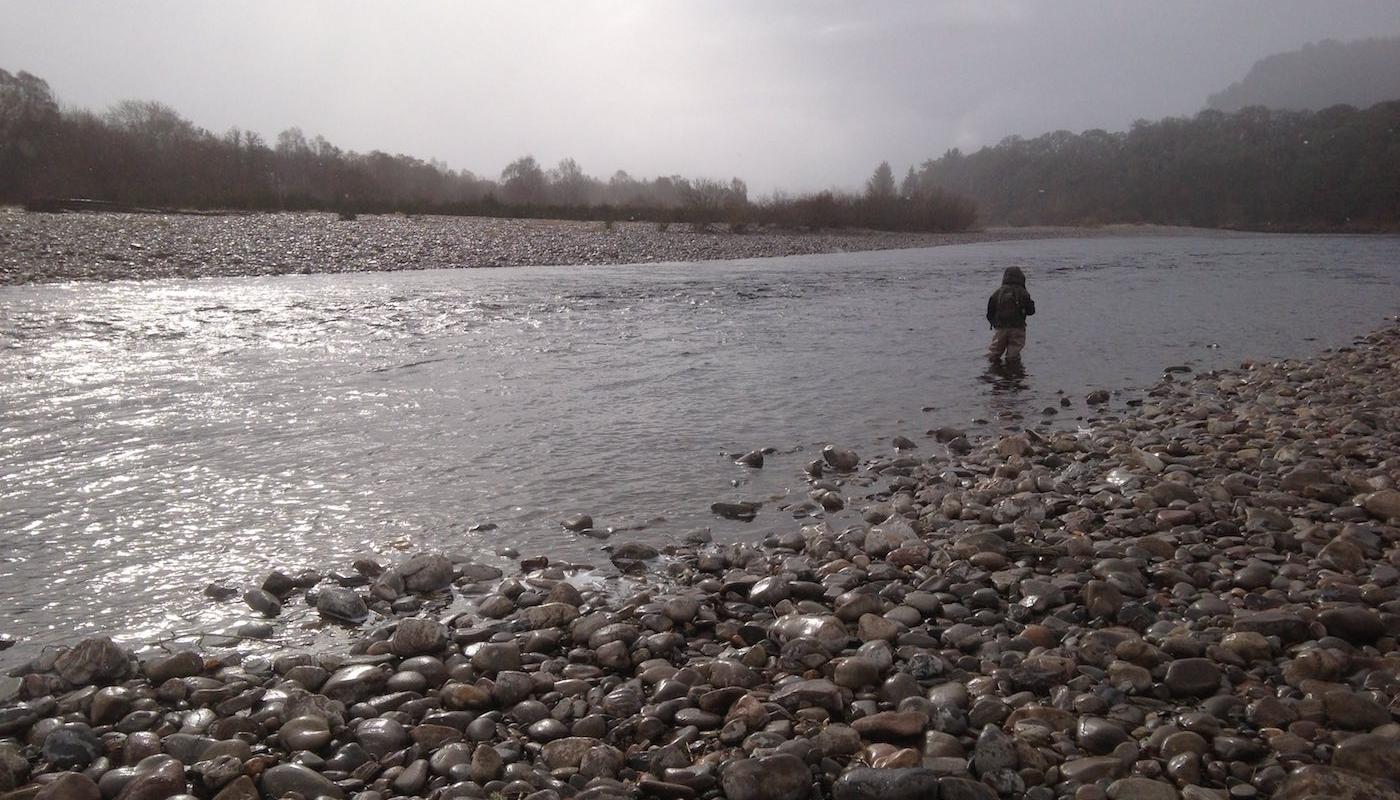
This salmon fisher is out presenting his fly on the lovely Meetings Pool of the River Tay at Kinnaird. This entire area of the Tay Valley is steeped in natural beauty and attracts many salmon fishers each year. Book a professional River Tay salmon get to show you all of these middle Tay fly fishing hot spots.
This fly was designed by myself while working on the River Tay and is a particularly deadly salmon fly patterns. Here's the correct dressing information for this pattern;
Hook: 1
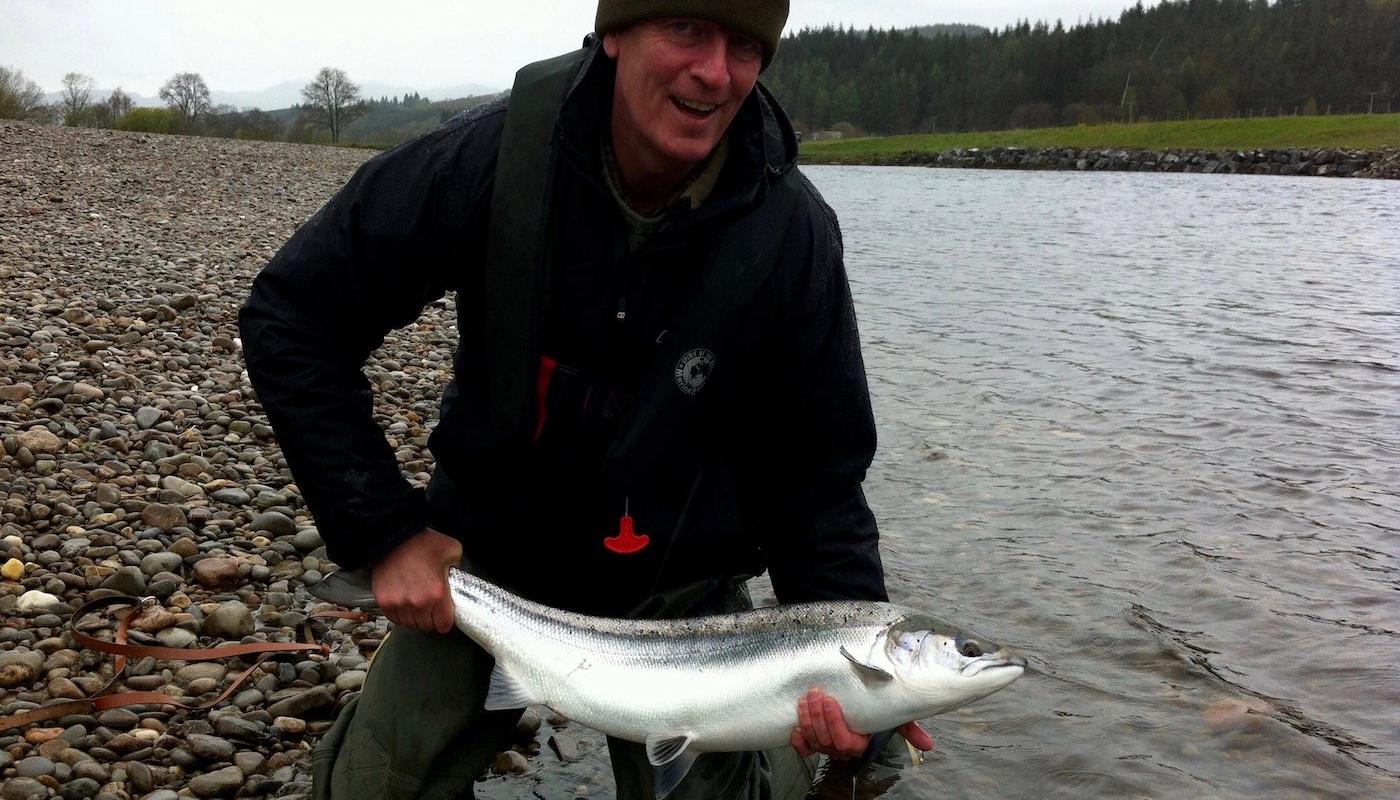
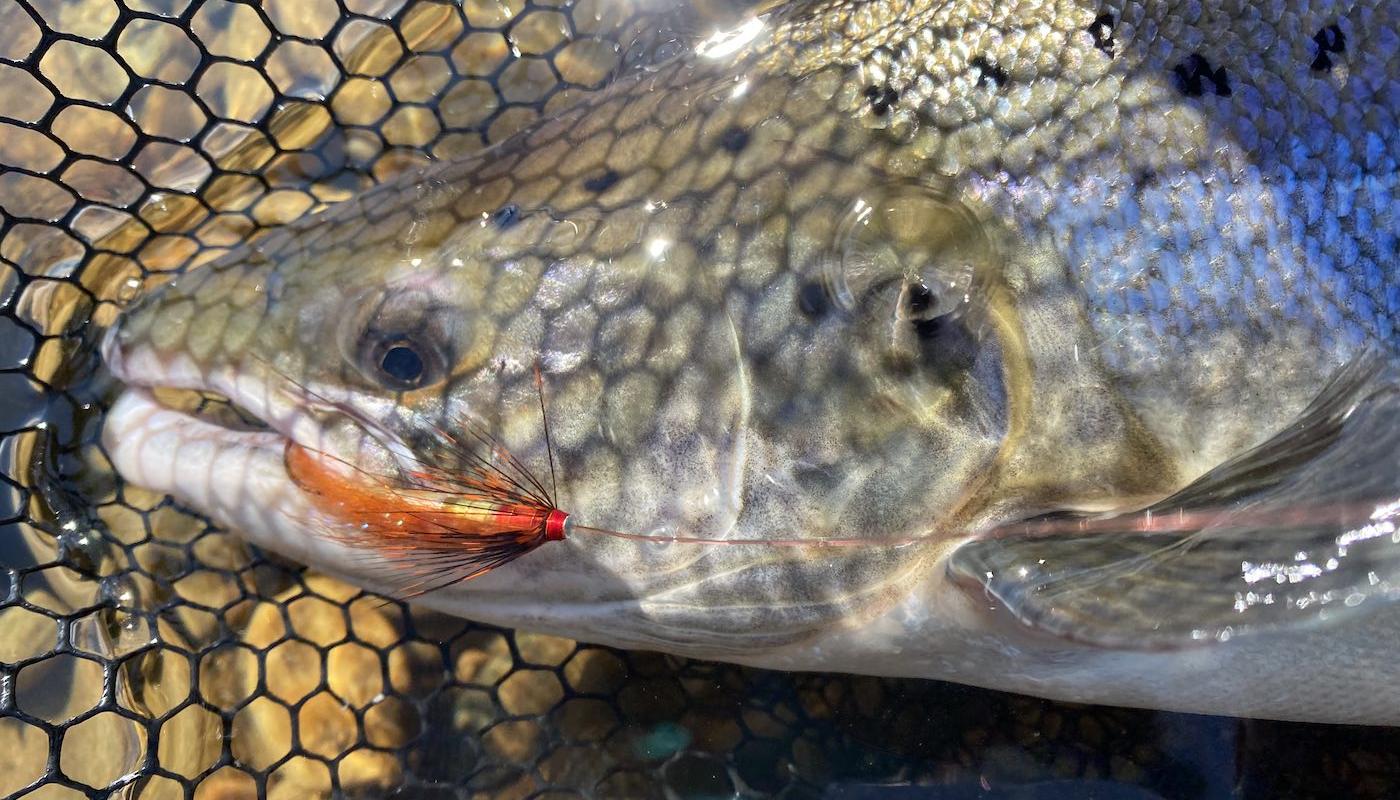
If you've hooked your salmon correctly and played the fish properly then managed to steer the fish to a quieter area of the salmon pool then the landing stage is nothing more than drawing the fish over a pre-sunk landing net then simple lifting the net as you can see here.
I personally manufactured & named this salmon pool 25 years ago as previously it was a big deep hole full of fallen trees and was completely un-fishable. It took one week and much gravel movement to create and pack this perfect salmon fishing riverbank you can see. The pool was named The Trap as it is indeed a trap for running Tay salmon as the deep water channel flows right through this side of the river forcing salmon to come through and stop in this beautiful pool.
Here's a lovely fly caught salmon by one of our guided fishing guests which was caught on the River Tummel neat Ballinluig in July. This fishing area of the Tummel is close to Dunkeld & Pitlochry. You can see the salmon is being perfectly supported by this salmon fisher while I took the salmon capture shot as his salmon fishing guide.
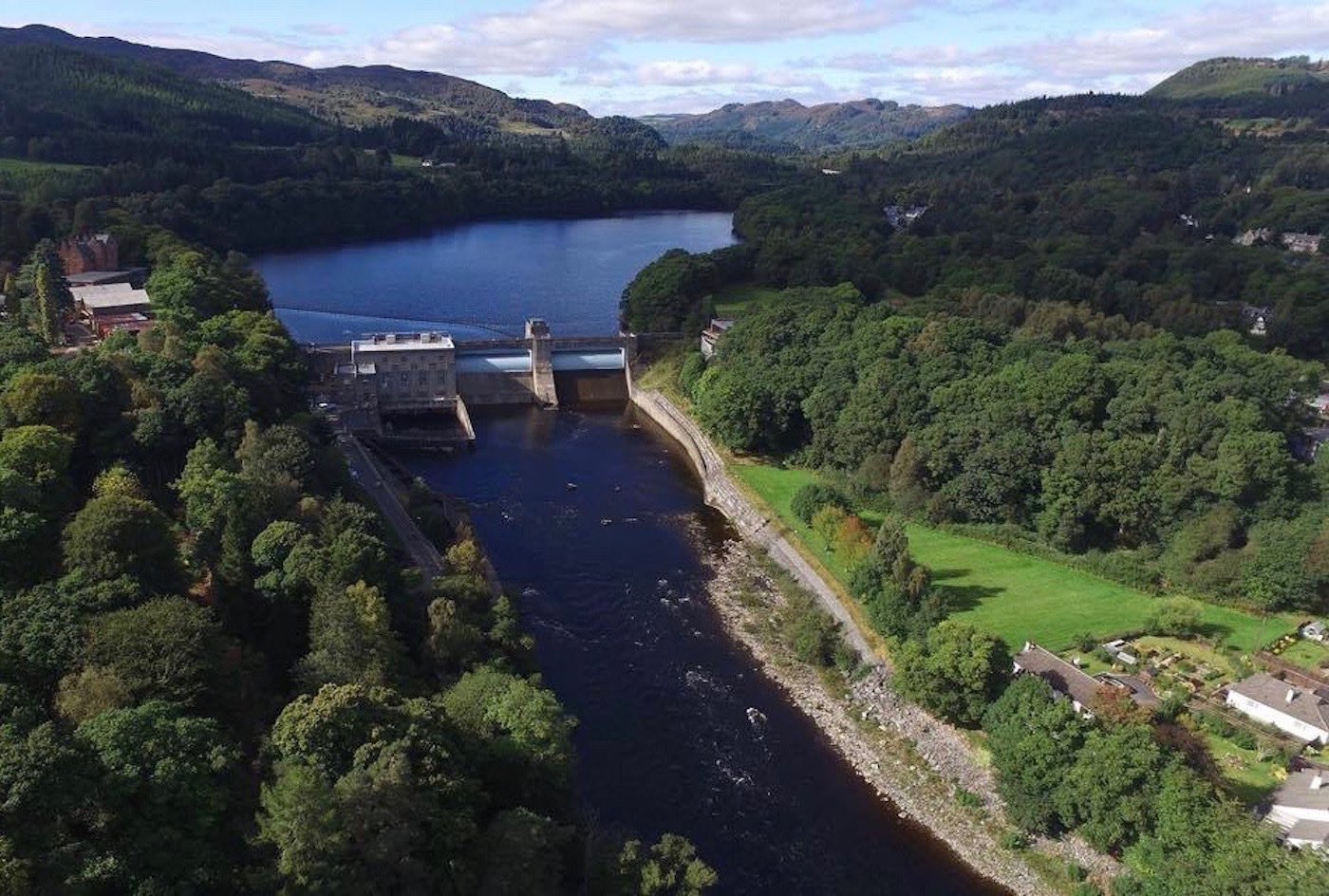
The huge hydro dam in Pitlochry was constructed in the 30's and is a colossal environmental disaster for the River Tay catchment as are all such hydro production schemes. You can see the concrete barrier which stops the entire river from replenishing the natural salmon spawning beds during high water conditions. While electricity production is important we should not be sacrificing our environment and the creatures that depend on it.
Here's a 16ft River Tay salmon fishing coble constructed from larch and oak. These traditional salmon boats are very stable yet can navigate shallow water when required. I've spent years out in this style of River Tay boat and enjoyed the capture of many salmon while boat fishing. This is one of the Kinnaird Beat boats on the River Tay near Pitlochry in Highland Perthshire.

Salmon Fly Fishing In Scotland

By 18th August 2020

There are many skill sets required in order to be successful in salmon fishing anywhere in the world and salmon fly fishing in Scotland is no different. Freedom of thought and good old 'common sense' play a big part of success in this amazing pursuit.

Assuming you've got the correct equipment levels and you're tuned in on how best to use that kit as you move from pool to pool then your thoughts should be fully focussed on the fly you're using and where in the water column you should be targeting its presentation.

Here's a 16ft River Tay salmon fishing coble constructed from larch and oak. These traditional salmon boats are very stable yet can navigate shallow water when required. I've spent years out in this style of River Tay boat and enjoyed the capture of many salmon while boat fishing. This is one of the Kinnaird Beat boats on the River Tay near Pitlochry in Highland Perthshire.

Salmon Fly Fishing In Scotland

Contrary to popular belief when fishing in the very cold water of early Spring salmon are to be found in the top 3 feet of the water column and not down deep as per the 'deep & slow' early Spring tactical nonsense you often here. To give you the logic behind that the warmer water thermals are to be found up high and this is where salmon will be more comfortable holding in the near freezing conditions of early Spring. In addition to knowing that factual information a slower fly in the cold water always works better than what a faster fly will achieve. Positioning your salmon fly approximately 1 to 2 feet down in the water column with a slow steady swing is very effective during these early cold water months.

The huge hydro dam in Pitlochry was constructed in the 30's and is a colossal environmental disaster for the River Tay catchment as are all such hydro production schemes. You can see the concrete barrier which stops the entire river from replenishing the natural salmon spawning beds during high water conditions. While electricity production is important we should not be sacrificing our environment and the creatures that depend on it.

The Pitlochry Salmon Fish Ladder

If you go to the Pitlochry fish ladder on the Tay during early Spring you'll even see the kelts sitting high up in the water column with the sun on their backs and not 10ft down at the bottom of the viewing chamber tank. As the water warms during late Spring fish will go down to the cooler bottom area of the river. Understanding where to be fishing and selecting the correct sinking line system to put your fly there is step one of 'tuning in' correctly to the optimal fishing approach.

Here's a lovely fly caught salmon by one of our guided fishing guests which was caught on the River Tummel neat Ballinluig in July. This fishing area of the Tummel is close to Dunkeld & Pitlochry. You can see the salmon is being perfectly supported by this salmon fisher while I took the salmon capture shot as his salmon fishing guide.

Late Spring & Summer Salmon Fishing

Once the milder Scottish air & water temperatures of late April, May & the Summer months arrive it's very much a case or reading the water conditions carefully and working on the assumption that salmon have taken up deeper holding positions if you're fishing a pool with any kind of depth to it. There's no point carefully spacing you fly swings down through a lovely salmon pool when you're on a 10ft type 3 sink tip fished of a floating line and the resident salmon are all holding several feet or more below your fly! I've seen full sunk lines and small salmon flies work very well during these months contrary to popular belief but again thinking outside the box will put many more salmon in your landing net each year if you can break from the normal approach routines.

This is a very deadly salmon fly throughout the salmon fishing season in Scotland. This 'Jock's Shrimp' pattern I developed over a 5 year period of daily riverbank salmon reaction observations on the River Tay while working as a professional Scottish salmon ghillie in Perthshire.

Deciding On A Salmon Fly Pattern

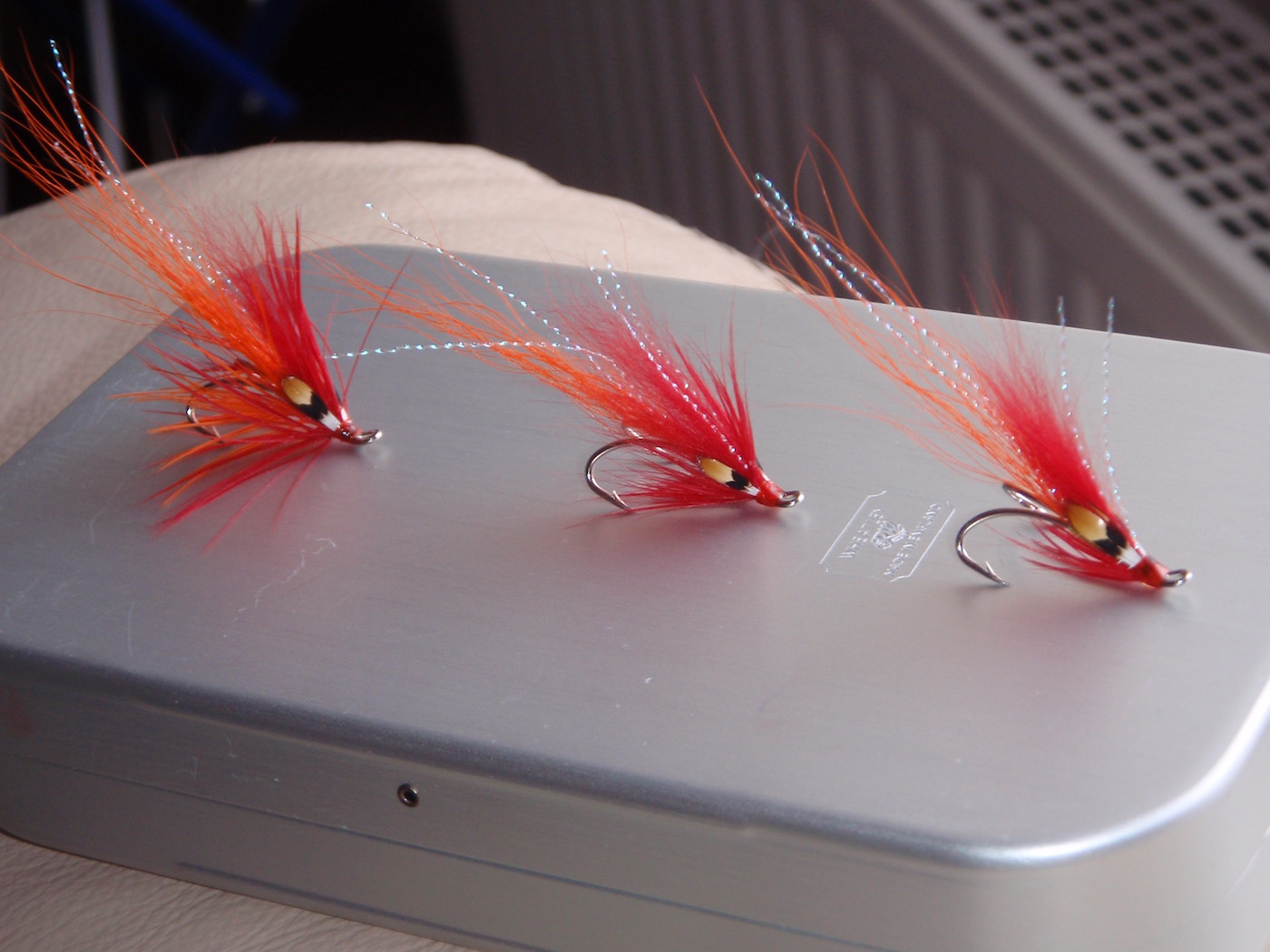
The next thought to then consider once you've decided on a salmon fly pattern is how heavily dressed do you want the fly. Personally I fish a more heavily dressed fly when fishing down deep and one that will appear to be life like with soft hackles as it glides and waggles over the riverbed. For a faster fly fished up nearer the surface I'll choose a much lighter dressed equivalent of the same pattern and for middle of the water column presentation I'll go for a fly that's dressed somewhere in between. You can see exactly what I mean in this accompanying photograph showing the three versions of the same fly pattern.

I personally manufactured & named this salmon pool 25 years ago as previously it was a big deep hole full of fallen trees and was completely un-fishable. It took one week and much gravel movement to create and pack this perfect salmon fishing riverbank you can see. The pool was named The Trap as it is indeed a trap for running Tay salmon as the deep water channel flows right through this side of the river forcing salmon to come through and stop in this beautiful pool.

Subsurface Salmon Pool Thoughts

I'll guarantee that 85% of Scottish salmon fishers never focus their minds on exactly how the salmon pool they're fishing may look from beneath the waterline nor as to where in the water column salmon are likely to be holding. Until you put your mind onto this concept mode you'll remain a 'cast and hope' specialist and you'll only ever pick up the very occasional fish. To become a consistent catcher of Atlantic salmon in Scotland you must get your mind onto your salmon fly and pair its swim behaviour 'exactly' with how you perceive things to be from below the waterline. When salmon aren't coming up several feet to take your fly swing it down into that square foot of water directly in front of a deep holding salmon's nose and watch what happens!


More Salmon Fishing Articles