

By Jock Monteith 29th September 2026
Effective salmon pool water coverage and a sound understanding of how to react to the inevitable take from a salmon are the biggest two misunderstood aspects of Scottish salmon fishing.
The next few paragraphs will maybe cause you to adjust your strategy if these points differ from what you're currently doing.

Deploying Sub Surface Salmon Fly Thoughts
Once you've mastered the art of Spey casting or whatever cast you use to deliver a reasonable length of line consistently to the salmon river it is crucial that your thoughts not only become 'sub surface' but also focus on covering as much water effectively & consistently as you can throughout the full salmon fishing day. It's never been too easy to catch salmon (except for the odd occasion!) so make sure you're bringing to the table the necessary water coverage strategies required for success.

Effective Salmon Pool Water Coverage
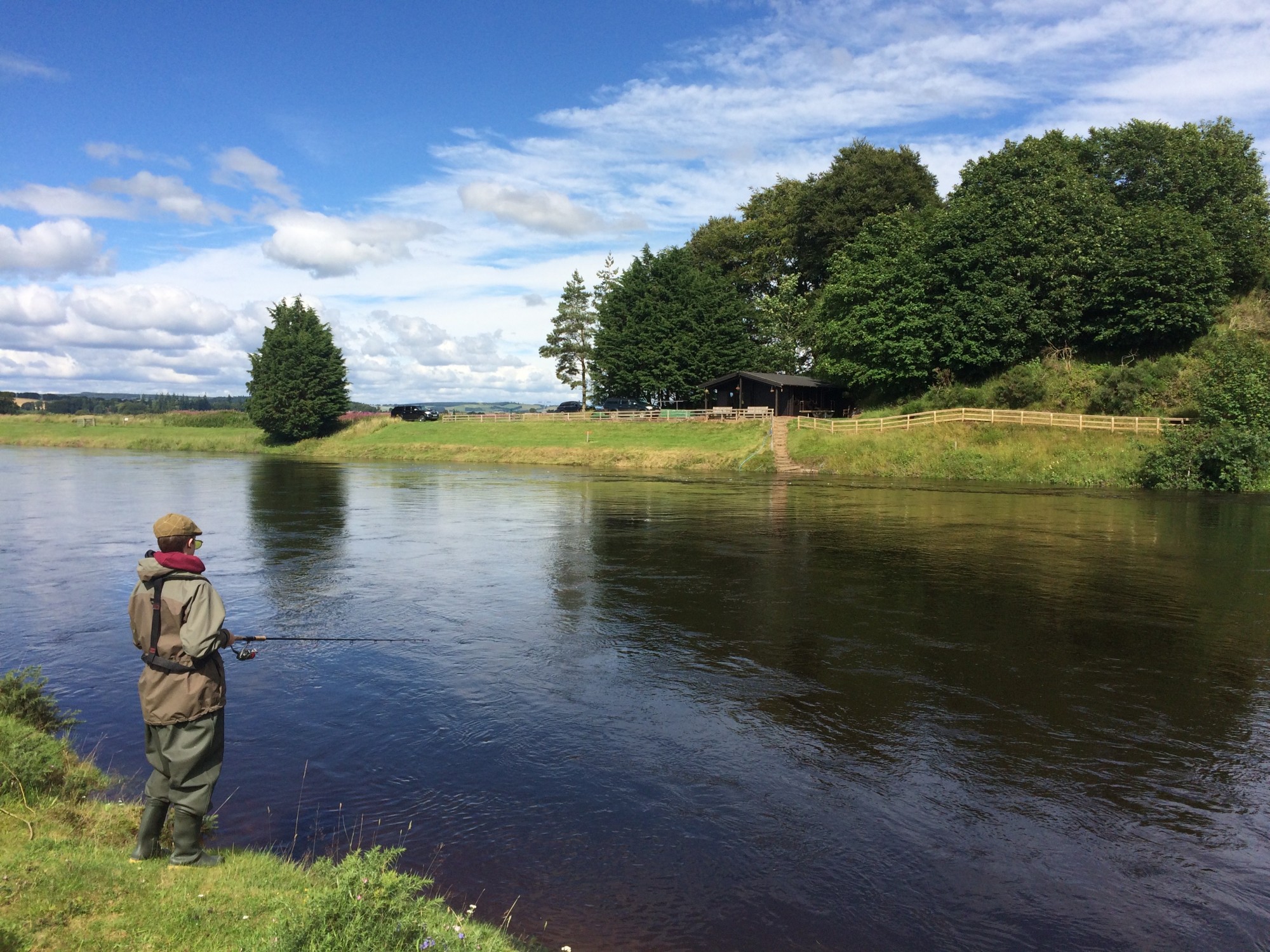
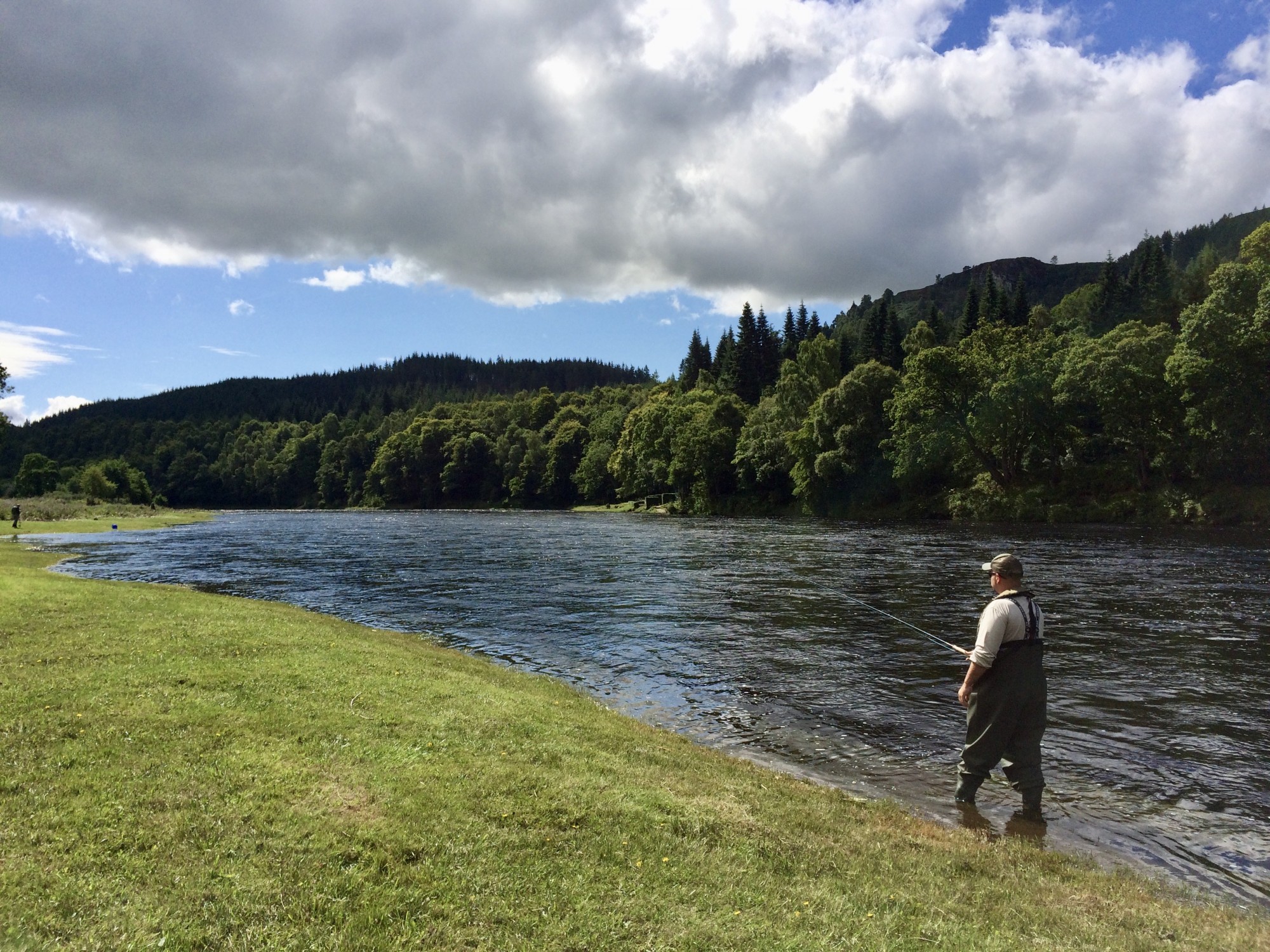
Logic should tell you that the more water you effectively cover the more you are raising the odds of swinging your fly in front of a taking fish. Showing a salmon too much of the fly from what I've seen throughout my professional career will only diminish the chances of a salmon reacting positively to it. With that in mind make sure each & every swing of your salmon fly is spaced at exactly 3 feet which is normally the length between the butt cap on your rod and the first butt ring on a normal sized salmon fly rod if you need an approximate measuring tool. Look for a riverbed feature directly under the rod's butt ring before casting then simply move to that exact spot if you want real wading boot precision movement!

Separate Your Salmon Fly Swing Spacings Effectively
Any less than 3 feet and you're showing salmon far too much of the fly and reducing your effective water coverage by hundreds of metres over the full course of the fishing day. Any more than 3 feet and you're possibly going to miss swinging the fly into the 'taking range' of a salmon that's keen to cooperate. I've personally found 3 feet to be the perfect fly spacing measurement which equates to 3 small steps between each cast which is much safer than 1 big step while wading!
Focus On What The Salmon Are Seeing
Imagine you were a salmon watching a salmon fly swing closer and closer separated by 6 inches to a foot. By the time the fly was over or in front of you you'd already have been too used to seeing it and likely not react through boredom! On the other hand if all of a sudden the fly is right on top of you and you haven't been able to see too much of its approach there's much more likelihood of a solid predatory reaction. The worst case scenario if the fish doesn't take is that that you've warmed it up for your fishing buddy who's 60 yards behind you which automatically gives you a credit from our Salmon God!
What To Do When A Salmon Takes
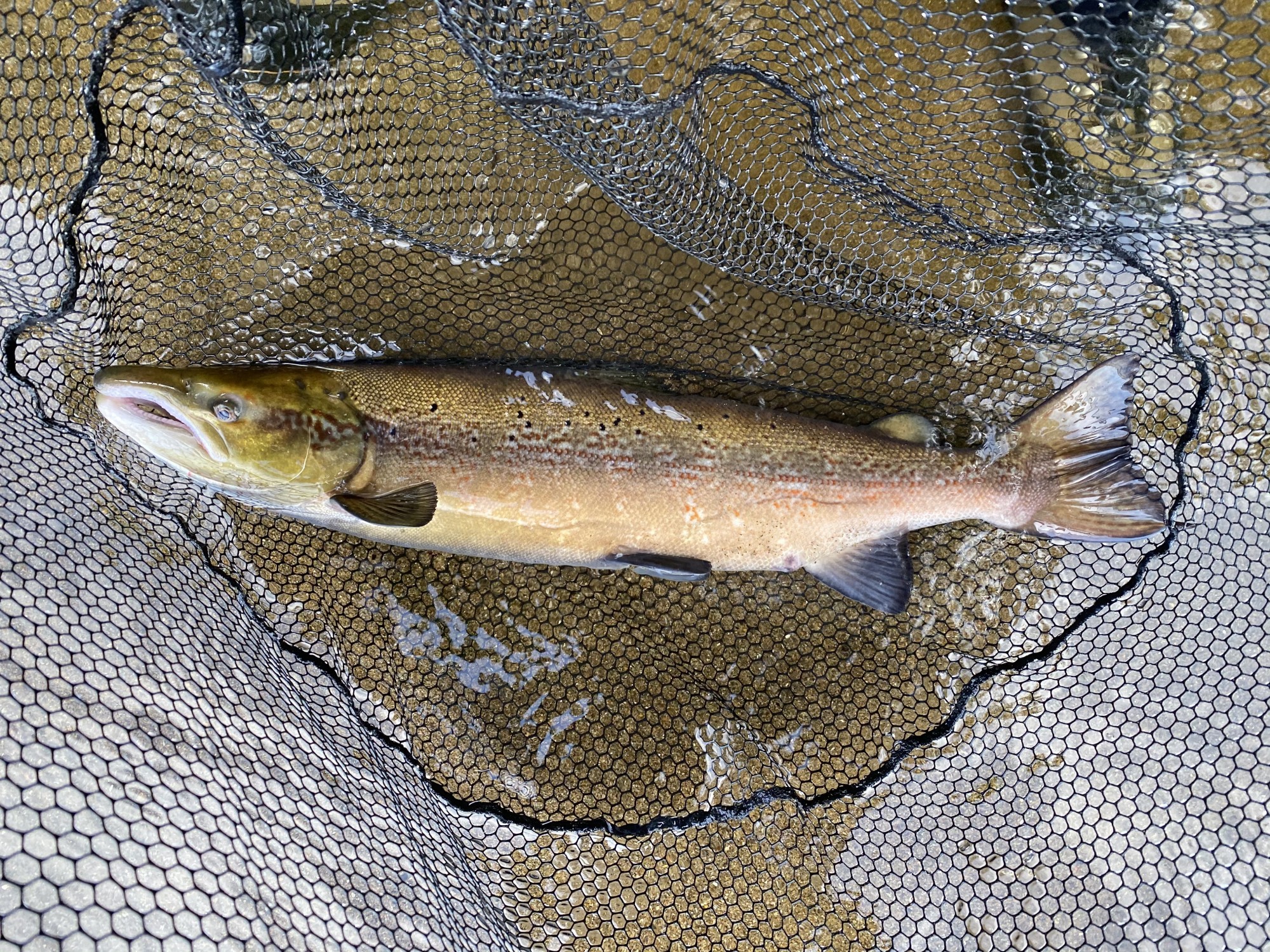
Most of the salmon fishing books are full of utter nonsense with this 'let the fish draw line and slowly lift into it' guff. If you do that you'll find that the majority of fish will shake the hook out soon into the fight. Don't take a chance after all the effort and tactical astuteness you've deployed to get to the critical magical moment when a salmon cooperates. Logically, all hooks require pressure to be properly set so if you think the soft action of a fly rod and lightly set fly reel clutch are going to convert the majority of these hard earned hooking opportunities into landed salmon then think again!
How To Effectively Set A Salmon Fly Hook
Let the salmon take the fly past the early 'dunts & nudges' stage which often lasts for several seconds until you're well into the steady 'draw of line' (peeling off the reel) stage. Keep the rod tip down and firmly clamp your fly reel's face until the line tightens up solidly. Directly feel the weight of the salmon for a further 3 to 5 seconds with the rod tip pointing down in the direction of the fish as that weight you're now feeling applies the logical hook point pressure needed to set the hook properly. Once you've felt the fish's weight release your hand from the reel face, raise the rod and say to yourself thanks Jock I owe you a large Macallan! I guarantee you the fish won't drop off if you do exactly that at the correct moment. Just beware that you don't alllow the 'instantly released' salmon take adrenalin get the better of you making you come in too early with your hook set attempt as the take from a salmon is the only thing in this world that can effectively speed up time!