

By Jock Monteith 20th March 2026
This is a seldom openly discussed but important part of salmon fly fishing set up so here's my own professional salmon fishing guide analysis of the facts as far as I see it on weight and length of salmon leaders, sink tips and which leader material will never let you down.

Are Salmon Leader Shy?
Firstly I think it's very important to understand that if a salmon is seeing your leader after fishing down through a pool then the fish has already ignored your offering! Our game isn't like trout fishing where a trout can come to the fly from any angle therefore able to get a good look at the leader. The weight or bulk of a salmon fly leader is of little relevance in Scottish salmon fishing unless you're in exceptionally difficult low clear warm water conditions with stale and edgy resident salmon in the pool where using the tiniest of lightly dressed Summer salmon flies is your only chance. Only in that situation would I ever be using a 10lbs or 12lbs leader only so I can thread the eye of the fly and pare the presentation down for subtlety reasons. In normal fishing conditions with normal sized flies an 18lbs leader does the trick even when fishing a fly down to a size 12 in the lower water conditions of late Spring & Summer. Also, never underestimate the potency of a size 11 or 12 salmon fly from mid May onwards as many anglers fish far too big a fly at that time of year which salmon see too much of.

Energy Transfer To Turn Over The Salmon Fly
The bulk and weight of a salmon fly leader should be selected based on the bulk and weight of the salmon fly being used. The art of effectively & effortlessly 'turning over' a salmon fly is 100% to do with energy transfer to the fly after the forward delivery power stroke of the cast has been applied. In other words a very light or limp leader will struggle to make that energy transfer effective all the way to a salmon fly if the leader has not been selected with the bulk and weight of the salmon fly being used.

Salmon Leader Length & Breaking Strain
The length of the leader should be dictated by the depth you're trying to fish the fly at. In other words you don't want to be fishing with a 10ft leader if you're fishing a sinking tip as the tip will certainly do its job however the fly will be riding higher in the water column. In this situation a shorter leader will keep the fly down where you're really intending it to be in the water column when using a sink tip. Personally I like 18lbs test for the majority of my fly fishing when normal sized 7's, 9's or even 11's are the order of the day. With heavier tubes I'll move up to 25lbs test (for 'bullet like' turnover even at range) or with much smaller flies I'll seldom go below 12lbs test on the bigger Scottish rivers where there's always a fair chance of a heavyweight interception as you don't want to have to wait until spawning time for a chance with the net!
Leader Lengths Paired With Different Sink Tips
For sinking tips or full sinking fly lines I'd shorten my leader right down to as little as 3ft with a very heavy 'type 7' (or heavier) tip or to a 4ft to 5ft leader length with a regular 'type 3' tip as again you don't want your sink tip down and the salmon fly riding higher which it will do with a longer leader. Keeping different leader weight material coiled up in your fly box is wise so you know you've always got spares if you lose your leader as forgetting a leader spool is easy but its unnecessary to carry the entire leader spools about with you. A few neatly coiled spare leaders of varying breaking strains sit perfectly and look at home in any fly box.

Choosing Which Sink Tip To Use
There's far too many water condition permutations to consider for there to be a right or wrong on this topic. A little common sense however goes a long way once you understand where salmon are to be found in the water column throughout the different seasons and whether they're playing hard to get or not and they can indeed often be in either either frame of mind! A keen fish will come several feet or more for your fly which might falsely give you the impression your fly was close to it when it took. Stubborn 'educated' salmon will usually completely ignore a fly unless you're able to swim your fly within a few inches of their noses to force a territorial attack. This usually occurs in the warmer water Summer or later months of the year and that's when you can often need a heavy & long tungsten impregnated tip to get your fly right down into their strike zone!

My Own Personal Sink Tip Choice For The River Tay
Although I've previously designed excellent 'elegantly flying' Spey lines that were purposely built for turning over heavy & long sink tips of different sink densities I do have my own personal sink tip favourite that I used to fish with all year round on the deeper River Tay. That special friend is a braided core type 3 (brown) tapered tip in a 15ft length. This tip works a treat with a longish rod in the cold Spring water when you're primarily searching the slower moving water with slow fly presentation targeted at 2 ft down into the water column. In the warmer water of Summer where you're primarily looking to the faster, often shallower and better oxygenated streamy water for salmon to be in it also works a treat assuming you're able to dictate the depth and speed of your fly by mending or extended rod angle positions through the fly's swing (or both). This tip is fine on the deeper River Tay as is its big brother (Type 7) but you'd unlikely get away with these on the shallower Scottish rivers like the Dee or the Spey where you'd mainly need to be on the intermediate (Type 1.5) sink tip equivalent unless faced with a deep pool situation.

Which Salmon Leader Material Is Best
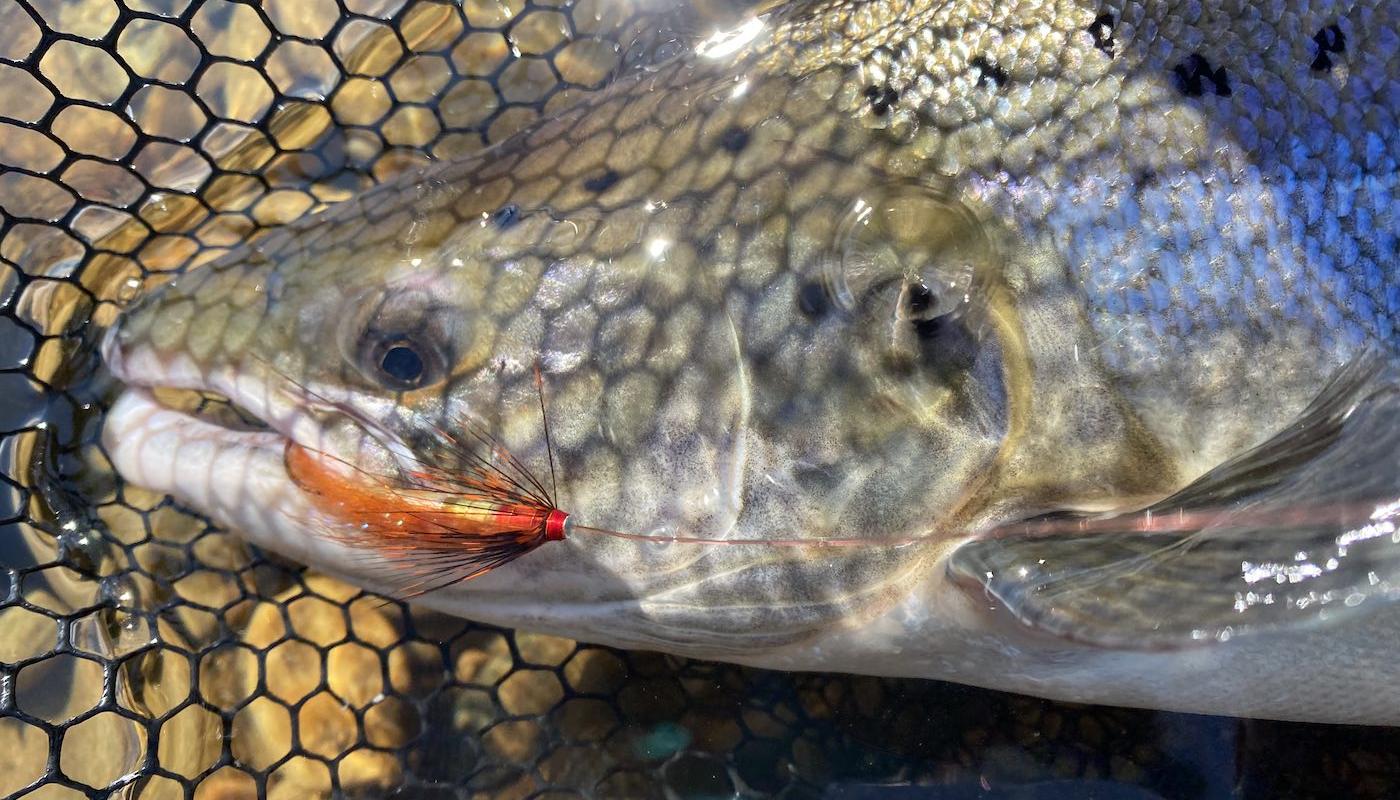
Since I started salmon fishing in the 70's I've never strayed away from good old Maxima Chameleon leader material. The reason for this can be summed up in one word and that word is 'reliability'. The link between your rod and the hard earned hook hold in a salmon's mouth needs to be as good as you can get as if there's a weak spot anywhere in your fishing line a salmon will undoubtedly find it! This timeless monofilament product even has a 'degradation' feature built into it will start to turn pink from its dark super fresh original colour when it's had too much UV. I've seen so many expensive leader materials break just due to the normal strain of a salmon battle or due to an unnoticed wind knot but when you're fishing with Maxima you've got absolutely nothing to worry about!