Jock monteith Salmon Fish Scotland logo
Learning to use your left non dominant hand with a Scottish Spey cast opens up a much bigger tactical range for your salmon fishing approach. This salmon fishing tour angler was learning how to do this from his professional salmon fly fishing instructor on the Oak Tree Pool near Meikleour on the River Tay.
This perfectly timed photograph was taken by professional photographer Louise Bellin on the Kinnaird Beat of the River Tay at the famous Junction Pool which is directly where the River Tummel enters the Tay. Jock, dressed in traditional Tweeds and waders holds his fishing rod, demonstrating the perfect Spey cast required in this salmon fishing hot spot for maximum water coverage of the lovely Tay salmon pool.
This River Dee salmon fly fishing trip guest came all the way from Washington in the USA to test out his brand new Spey rod. Look at the perfect parabolic action of his rod as he powers up the loading for another perfect forward delivery power stroke. This shot was taken by myself as his personal salmon fishing guide on the Invery salmon beat near Banchory in Aberdeenshire.

Speycasting Tuition

By 26th October 2017

Learning the traditional Scottish Speycast is one of the easiest and most satisfying casts of all to perform.

The important thing in mastering this cast quickly is that you're under the instruction of a professional salmon fishing guide who has a great understanding of the cast and who has excellent communication skills.


Learning to use your left non dominant hand with a Scottish Spey cast opens up a much bigger tactical range for your salmon fishing approach. This salmon fishing tour angler was learning how to do this from his professional salmon fly fishing instructor on the Oak Tree Pool near Meikleour on the River Tay.

The Hour Hand Salmon Rod Positions

The four rod positions pertaining to the hour hand position on a clock face for either of the single Spey casts is one third of understanding the simplicity of the Spey cast. The second crucial component which permits energy build up from the starting lift to the formation of the D Loop loading is 'smoothness & fluency' which makes these two words the second part of the jigsaw.

This perfectly timed photograph was taken by professional photographer Louise Bellin on the Kinnaird Beat of the River Tay at the famous Junction Pool which is directly where the River Tummel enters the Tay. Jock, dressed in traditional Tweeds and waders holds his fishing rod, demonstrating the perfect Spey cast required in this salmon fishing hot spot for maximum water coverage of the lovely Tay salmon pool.

Understanding The Scottish Spey Cast

Personally I can explain in absolute relevance the technical components of this cast in its entirety in under 10 seconds. You'll maybe doubt what I'm saying here but this is hard factual information that will make total sense and endorse the simplicity and ease your understanding of exactly what makes this cast work.
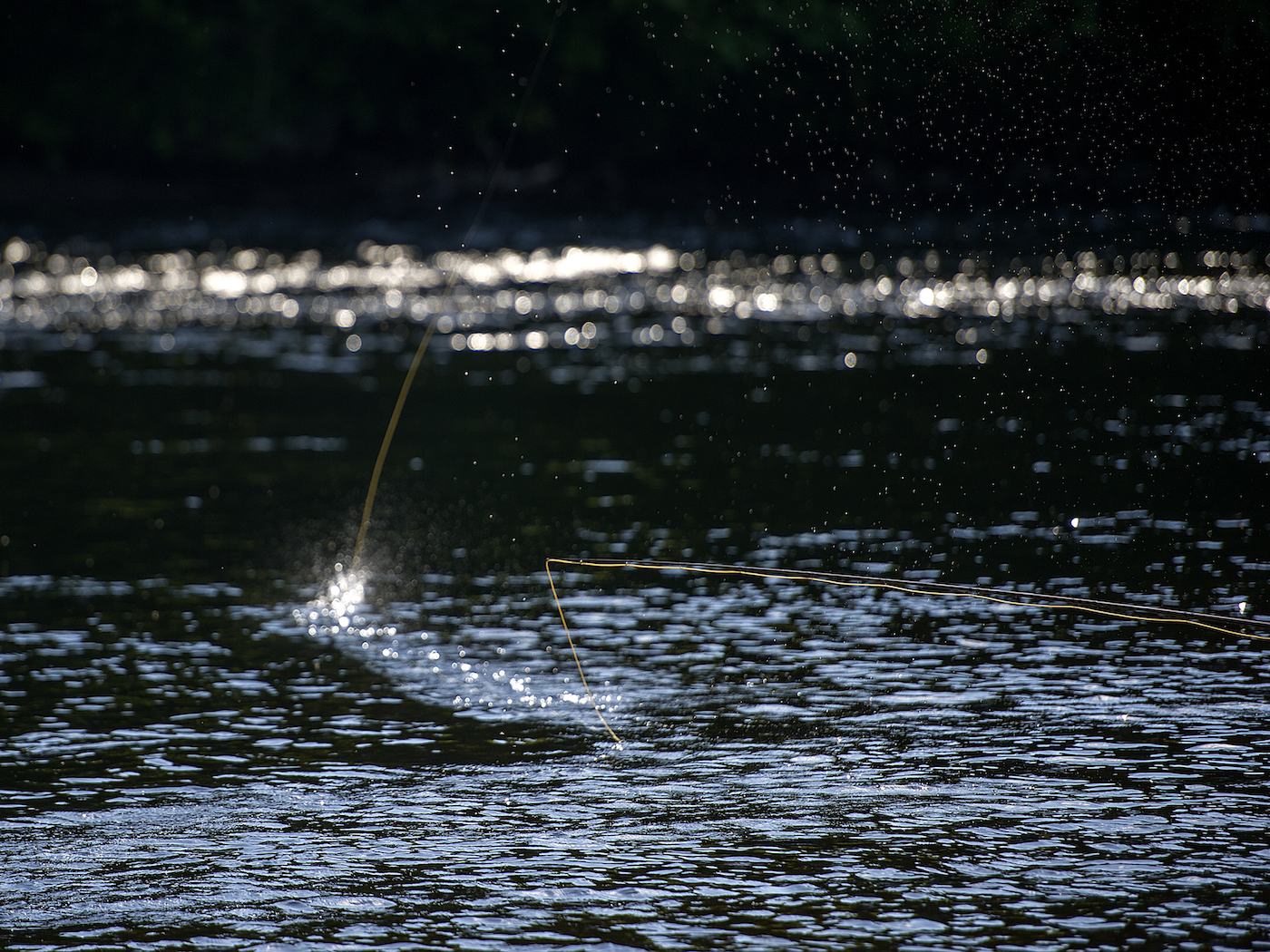
Here's a Spey casting error that can be easily rectified under the supervision of a professional salmon fishing guide. This type of splash down normally occurs when the salmon angler throws the rod at the river on the power stroke instead of stopping the rod high. Our salmon fishing casting lessons can quickly fix this common salmon fly rod casting error.

The Salmon Line Anchor Point

The third and final component of this 'art form' Scottish salmon fly presentation technique is simply studying the physical shape of the pre-power delivery stroke 'anchor point' where the belly of the fly line very briefly kisses the surface of the river prior to the forward and final power stroke. This is crucial to nail the correct timing off the water and I'll elaborate on that in the next paragraph.

Here's Jock Monteith amidst a Spey casting lesson on the River Tay under the historic Telford Bridge demonstrating perfect D Loop loading with the single Spey cast. The traditional Spey cast is the most effective and satisfying casts. This photo was taken by local Dunkeld photographer Charlie MacDonald. Jock is wearing his Graham of Menteith tartan kilt while demonstrating Spey cast with his 15ft Monteith salmon fly rod.

Maximise The Salmon Rod Positions

If you understand the importance of a 'low starting point & high finishing point' smooth line lift with a smooth sweeping outward swing with you observing the anchor point to execute perfect timing off the water then you'll grasp and fine tune the Spey cast in its entirety in under 30 minutes. Any longer than that means you're with the wrong instructor.

The action of your Spey rod is best optimised via proper line loading and if done correctly is virtually effortless like what you see here in this photograph. This salmon fishing trip guest is out on the River Tay practicing his Spey cast power stroke forward delivery near the Perthshire town of Pitlochry.

Watch Your Anchor Point While Fishing

Most salmon fishers who perform this cast look like 'racehorses with blinkers on' as they only ever study the deliver target area and can easily 'fluff' their timing off the water by not watching whether they apply the power stroke a millisecond too soon or late. Watching the anchor point release with your peripheral vision gives you exact timing off the water which maximises the power and concentrates that power 100% to the forward delivery.


More Salmon Fishing Articles