

By Jock Monteith 28th April 2026
It takes a fair degree of skill & preparedness to catch a perfect Spring salmon on the fly so over the next few paragraphs I'll zoom in on a few of the basic points that often mean the difference between success and failure.

Your Salmon Fly Reel
Your salmon reel should be mechanically sound and should always have the smell of WD40 or another lubricant about it. Personally I'm convinced WD40 is an attractant for salmon as for many years salmon takes came 'mysteriously' consistently after I'd used this oil or it was on my hands (prior to tying my fly on) after oiling a guest's reel who'd turned up on the beat with an unserviced 'squeaky' fly reel. It's also important that your reel is 'backed up' properly with at least 30lbs breaking strain braided backing which is checked and renewed (if required) at least every second year if your reel is heavily used. All 'unwaxed' backings can perish from mould if left in damp conditions on the reel which happens all too often. You don't want a hefty brute of a super fit Scottish Springer to be the one who lets you know there was a weakened area in your fly line backing!

Your Salmon Fly Rod
A 14ft to 16ft salmon fly rod is and always has been the best choice for the length of a salmon fly rod. I'm just not into this short switch rod nonsense as these rods and as with all the other 'new fad' fly line designs there's zero thought about 'fly control' at range which tells me that they have not been properly thought out with salmon fly fishing on bigger rivers in mind or designed by people who truly understand salmon fishing and what optimises the chances of success. An 11ft switch rod is never going to be easy to put 'loft' on your fish once hooked at range and especially with 'flow dragging' modern day shooting heads or to mend a fly line 'to the fly' on delivery compared with a much longer rod. Personally I always used a 16ft Bruce & Walker Spey rod on the Tay to 'specifically' give me total control of the fly at 30 to 40 yards which allowed me to properly present a fly 'slowly' at distance in the cold water conditions of Spring which also allows me some 'loft' to clear the fly line up off the water when playing a fish at range to avoid a drowned line scenario.

Early Spring Salmon Fly Lines
Your salmon fly line should be bulky enough at the front end to be able to turn over a fairly heavy sink tip with a biggish tube fly which is required through the early months of the Scottish salmon fishing season. A short (4ft) bulky front end leader (25lbs Maxima) is essential for the energy transfer to the fly when fishing a biggish fly as a light, limp or long leader will fail and give you very strained salmon fly turnover at best. Most floating Spey lines are too light up front to be effective with enough energy transfer to turn over a 15ft 'Type 3' or 'Type 7' sinking tip so look for a Spey line that's got a bit of 'beef' upfront to make heavy tip turnover easy or one that has been specifically designed to do so. The shorter thicker shooting heads will do this easier but you will compromise your 'fly control' at range if you use a shooting head as a shooting head's thin running line and bulky short head section is almost impossible to mend 'to the fly' with on touch down at range. Launching a shooting head out into 'oblivion' has nothing to do with salmon 'fishing' as you must have complete control of your fly and are able to maintain or alter your fly's swim behaviour whenever you wish at any point of its journey back to your side of the river.

How To Select Early Spring Salmon Flies
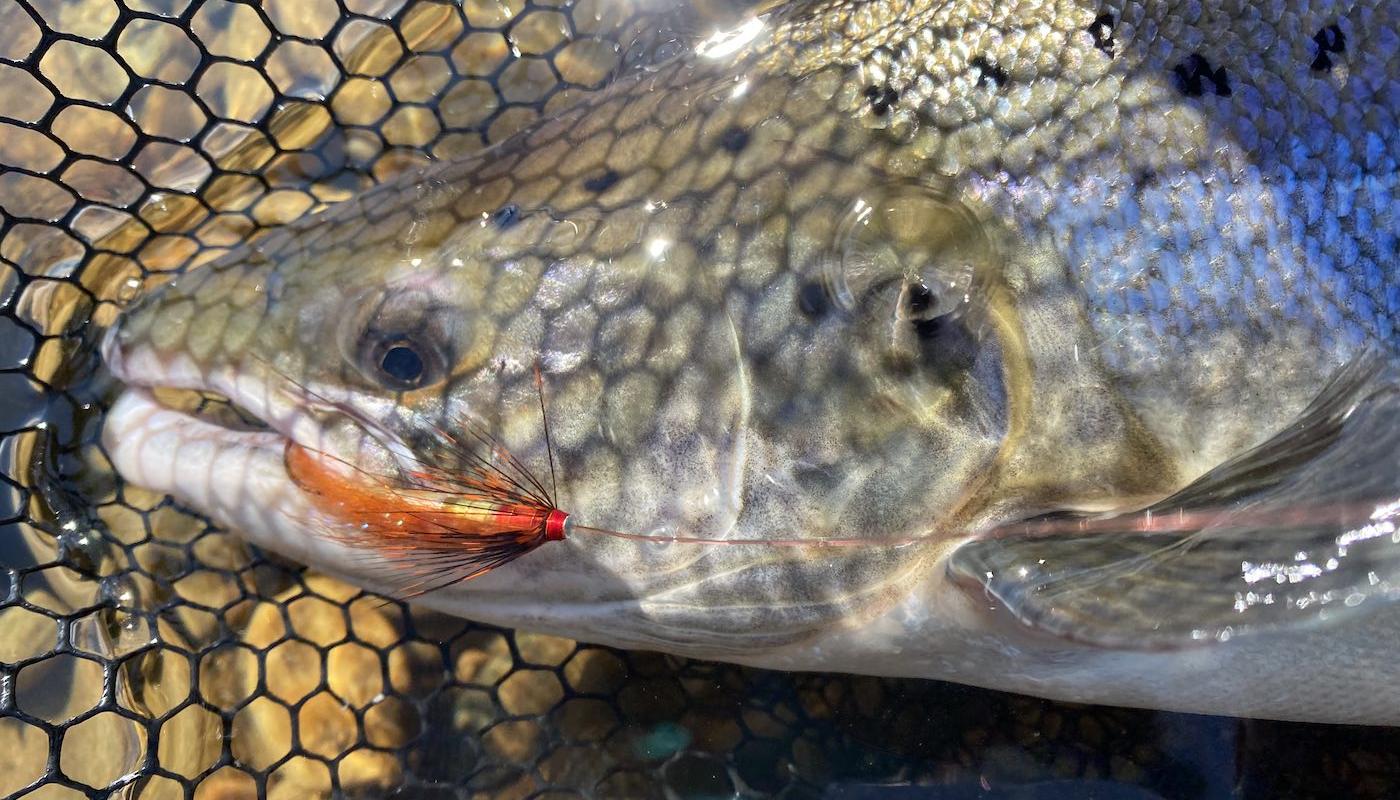
For the early months of the year a 1 to 2 inch copper or aluminium bodied tube fly with a nice 'waggly' wing with some subtle 'bling' to catch any flickers of sunlight would be the best fly choice in a few different Spring colours. Personally I always preferred the lighter aluminium bodied tubes fished off a heavy sink tip as these tube bodies have a far superior stream action than the much heavier and less mobile copper equivalents. The only three fly patterns you really need are a Dee Monkey (black & yellow), an Orange & Yellow and possibly a Cascade/Willie Gun as these 3 general colour patterns work as well as any that I've ever seen or needed. Once you get into mid April you'll need to be also carrying these patterns (or similar) tied in smaller regular double hooked versions to match the generally lower & warming water conditions. With any salmon fly make sure your hook points are in good order and check them periodically while fishing. Don't be shy at moving down to a subtle size 11 once the month of May appears as often smaller flies work best during late Spring for those astute enough to fish them.

Optimal Spring Salmon Water Coverage
It's important that your water coverage is optimised via good methodical fly swing spacings between each cast. Ultimately your water coverage is going to be the single most important component that's going to position your salmon fly over a cooperating Spring salmon at some point in the fishing day. All too often I see salmon fly fishers 'inching' their way down through a pool which is massively 'limiting' their daily salmon pool water coverage and therefore also their chances of getting in front of a 'taker'. Three to four feet between each cast is a great measure to work with and will allow you to cover plenty of water each day without showing salmon too much of the fly which often gets the desired inquisitive predatory reaction!

Maintain Low Key Total Faith When Salmon Fishing
As a professional salmon guide, the best mindset I've found when pursuing these amazing creatures is having solid 'low key' faith but drop the vibe of eagerness and 'instant gratification' expectations as seldom salmon will be caught quickly on any fishing day. A salmon take usually always occurs when your mind has completely drifted off the true task in hand. This recurring anomaly has convinced me over the decades that these creatures are tuned into a completely different frequency and they'll shy away from you and your fly if your vibe is too eager to interview them! I'd relate this to the same way when you walk into your house or office where you know there's a wifi signal even though you cannot see it or feel it so be careful with the vibe you're giving off when you're on a salmon river with a 15ft carbon fibre 'antenna' in your hands!