




By Jock Monteith 13th August 2026
Here's a few paragraphs on how to set a salmon spinning lure hook based on 'practice' not 'theory'.
Nothing beats professional time spent on a Scottish salmon river for observing the various aspects of this glorious pursuit.
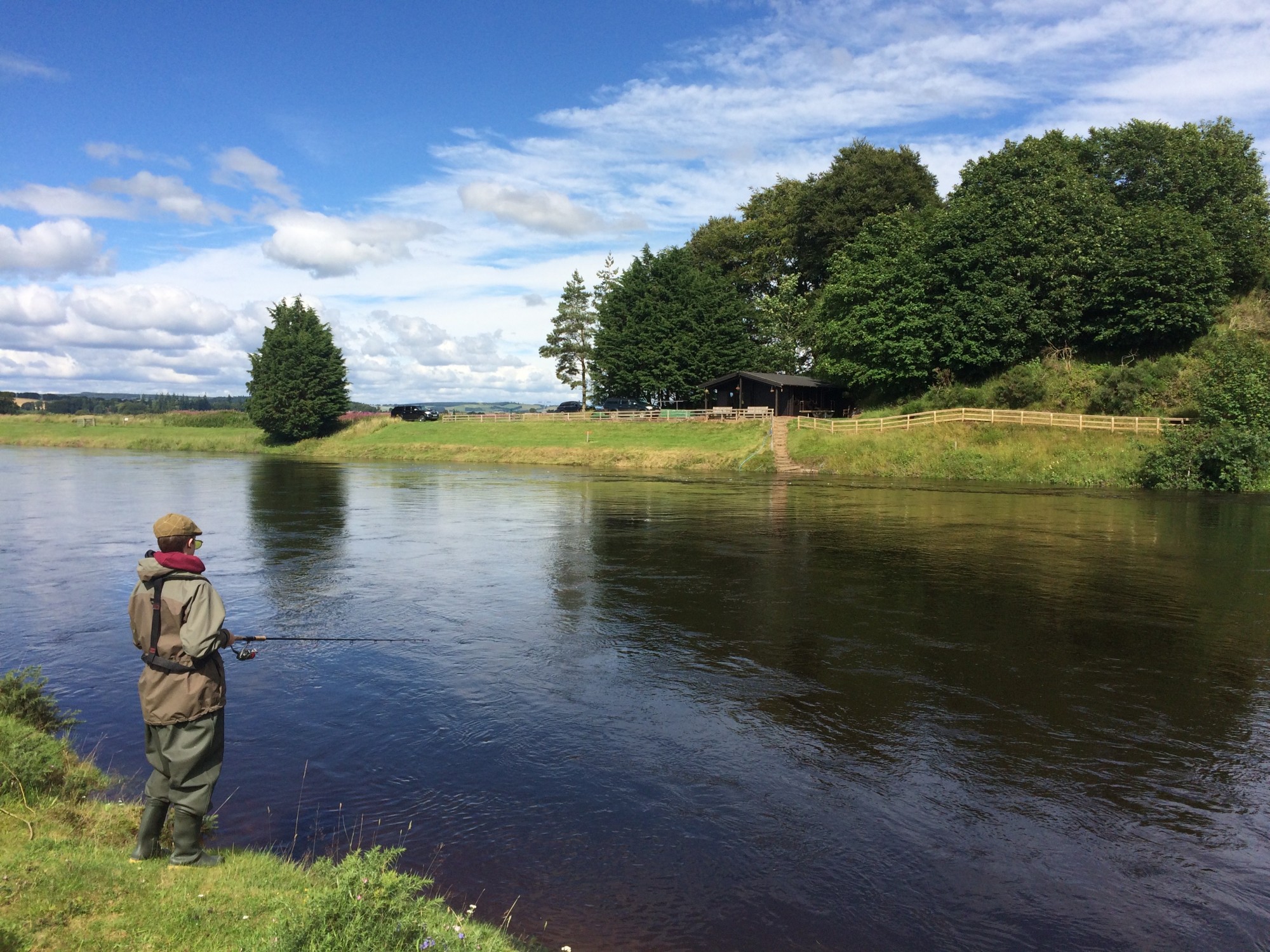
The Calm Before The Storm
Firstly I'd like to commence with something that is not commonly known or regarded but loses hundreds of salmon hooking opportunities on the Tay each year which I'm convinced is due to angler's misconception that the split second a salmon takes their spinning lure it is going to 'take off' like a bohemian bonefish on some death defying down river charge and break their nylon unless anything but the 'lightest' of clutch settings is deployed. The powerful runs from a salmon don't usually start until the fish realises it's in danger and that can sometimes be many minutes into contact but seldom within the first 10 seconds as at that early stage of proceedings the fish doesn't know what's going on.

Locate A Taking Salmon When Spinning
Before we start getting into the nitty gritty of logic based salmon spin fishing tactics for successful hook ups it's very important the angler fully understands exactly how to get themselves to those 'golden' hooking opportunity moments in the first place. Too many fishers turn up with no 'cast & move' water coverage knowledge so no effective water coverage occurs. While that can sometimes work on salmon beats that are stuffed with fish a logical and well thought out 'riverbank movement' plan is always going to stand the angler a far superior chance of success. If you want to cover the maximum amount of the salmon beat water you've paid for access to then move 1 rod length between each cast (10ft) and keep that going 'religiously' throughout the entire fishing day. If you follow this riverbank movement plan consistently it's highly unlikely you'll get to 5pm without some subsurface attention!

Tighten Up Your Spinning Reel Clutch To Set The Hook
This misconception has meant most of the spinning anglers fish too slack an initial clutch setting on their spinning reels (as they correctly do on their fly reels). When a salmon stops a hard fluttering metal lure or plastic plug it's not as likely going to hang onto it for any more than a few moments (like it will do with a fly) before trying to eject it. As the majority of salmon will approach and take the lure from behind (prior to naturally & immediately turning on the lure) there's a very good chance one of the spinning lure hooks is going to lightly lodge in its mouth. It is then crucial that sufficient pressure is properly delivered to the hook point(s) in the following moments or the salmon will very likely shake the lure out and be gone. This 'logically' cannot be achieved with a slack clutch setting as no effective hook point pressure can be applied. All salmon are masters at getting rid of unwanted foreign objects from their mouths and don't let them prove their skill to you!
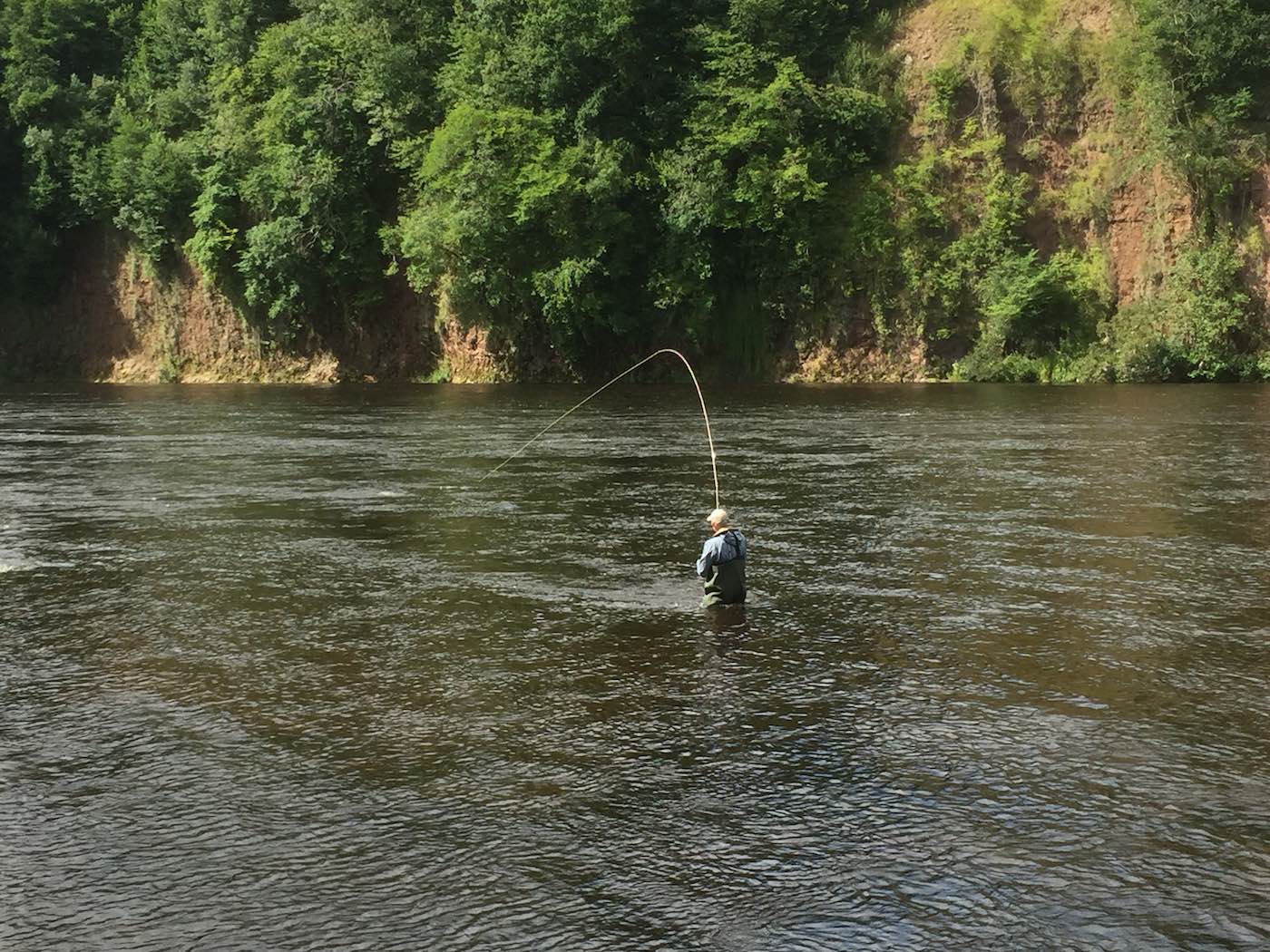
Loosen Off The Clutch To Play Your Salmon
Once you've truly felt the weight of the fish by putting put a good bend in the rod to set the hook(s) and are satisfied that is the case then loosen off your spinning reel clutch a bit as it's highly unlikely at that point the hook is ever going to come out and I cannot personally remember a fish coming off when I knew the spinning lure hooks were set properly. In the old days I recall my late mentor on the Tay picking up an already buckled 'harling' rod and giving it one almighty pull before handing over the rod and saying 'if it's getting off son it's getting off early! So when spinning on the Tay set your spinning reel clutch to a reasonably tight setting which doesn't have to be full lock but certainly enough for your drag not to negate the hook point pressure you're trying to achieve to set the hook. In other words a 'strong' pull with your hand on the monofilament or braid should take line off the spinning reel spool but nothing lighter than that!

Early In The Salmon Fight
After you've set the hook with a salmon regardless of how you've caught the fish all you're likely going to feel is a dead weight with some slow movement and a maybe a bit of initial head shaking. At this point the salmon will be unaware of the alien interview that lies ahead so it's unlikely to do anything too erratic. When any salmon finally realised it's in danger they'll usually firstly head to the bottom of the river for safety which is no doubt exactly how they'll react if a big predator panics them at sea. A high rod tip with a good bend in the rod is important as if you give the fish too much control it will try to rub the hooks out on the riverbed or on occasion try to wrap your line around a riverbed snag.

When A Salmon Does Wake Up And Run
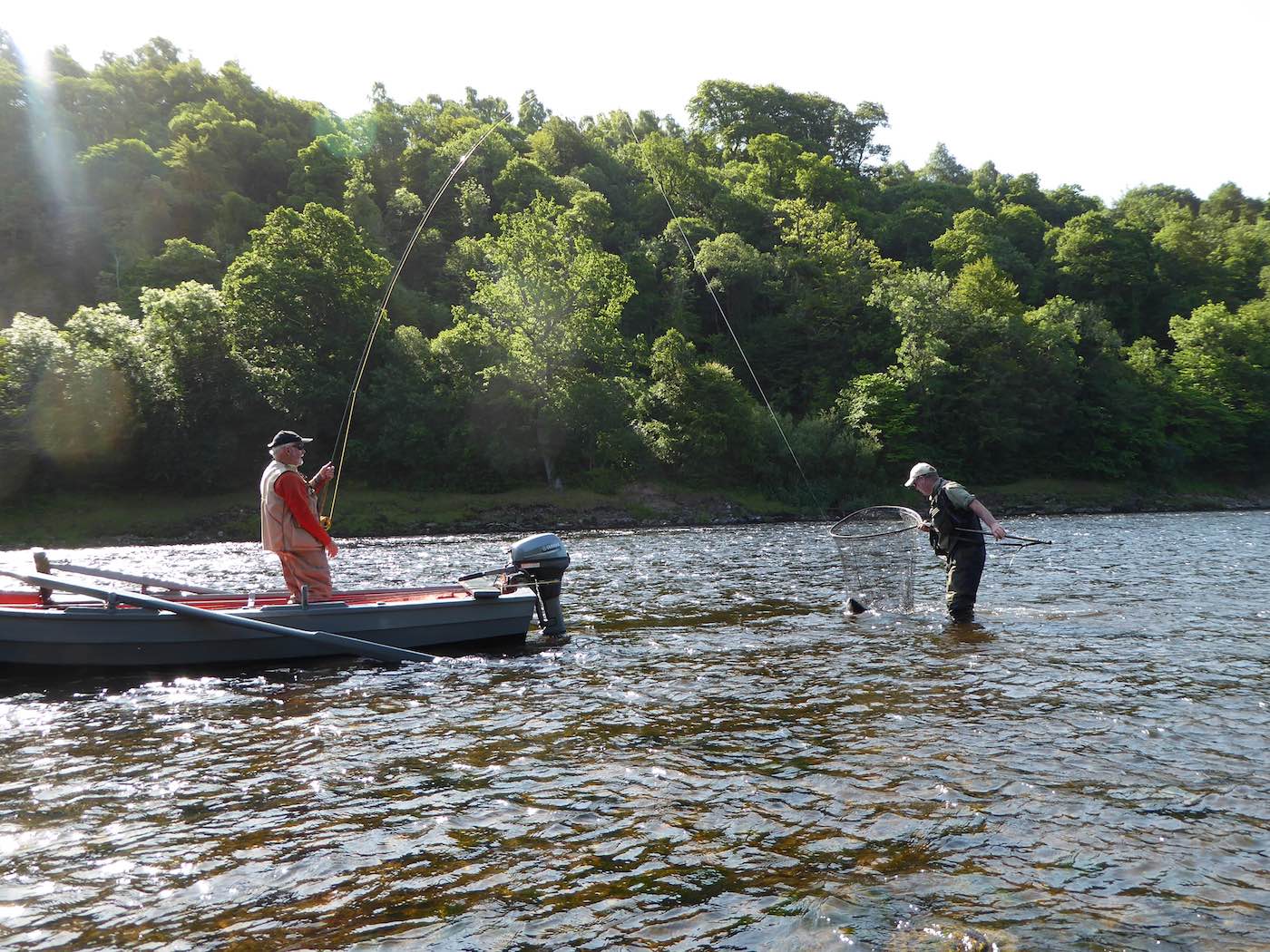
When your salmon finally realises it's in danger that's the time to expect fireworks. I've seen even big salmon being brought virtually to an angler's feet minutes into the fight with no real signs of life and then all of a sudden the salmon see's the angler which kicks off the real battle! Don't be deceived or caught off guard just because a salmon comes towards you too easily early into any contact and be prepared for that power surge run that will in all cases commence. Here's a classic example of what I'm referring to from a 14 lbs salmon that was caught on the River Tummel.
Netting A Played Out Salmon
Once a salmon's big runs have stopped and you've got the fish under control in the deepish river margins away from the main current a salmon that's ready to be landed will often be tail up and frequently showing its flanks. When you see this you'll know that it's now the time to land the fish. Whether you're on your own or with a ghillie the net should be sunk and the fish should be near the surface and with one big 'smooth' actioned continuous sweep of the rod the salmon should be drawn over the net then the net simply lifted. In decades of salmon fishing I can honestly say it seldom happens that way as most anglers don't understand what's expected of them at the critical landing moment and the ghillie usually ends up having to take matters into his own hands!