Jock monteith Salmon Fish Scotland logo
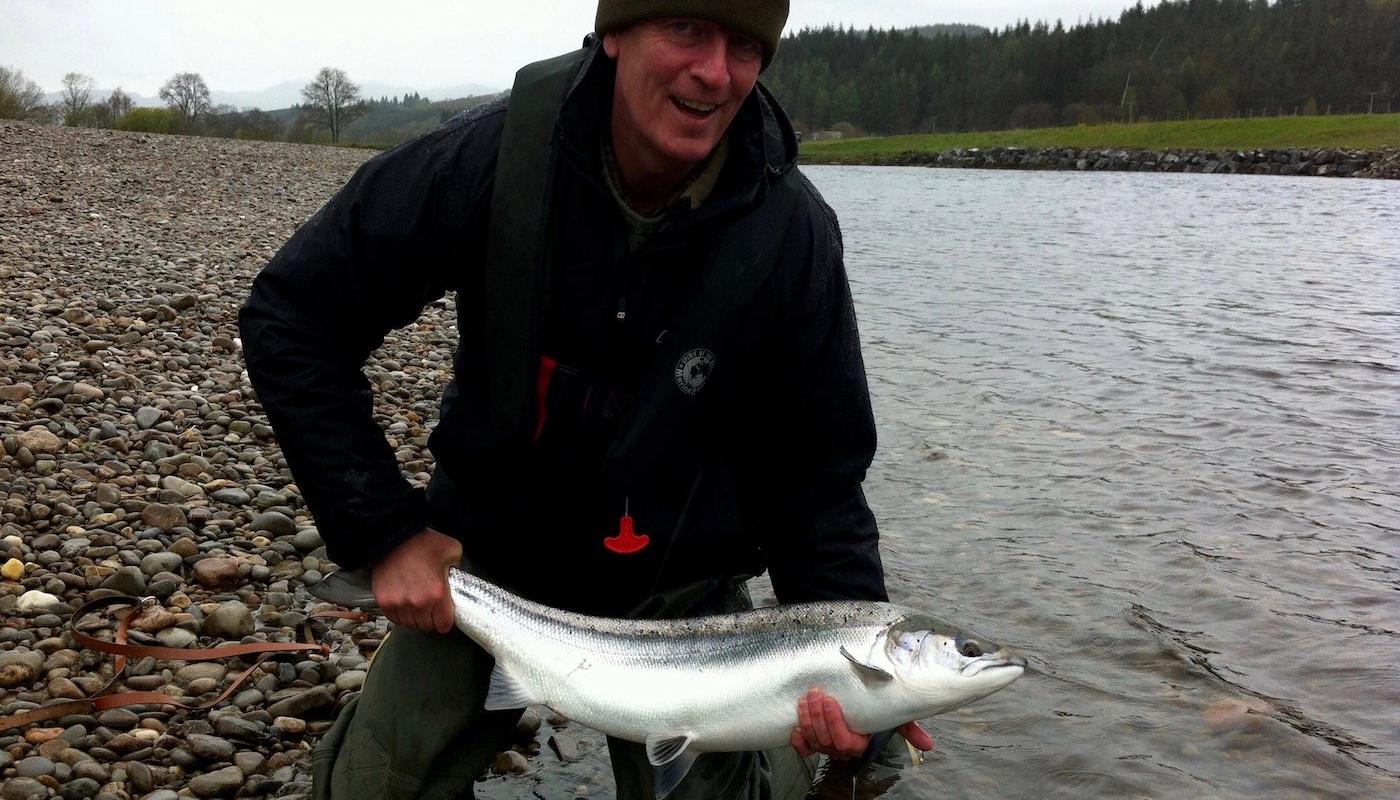
I took this picture of this beautiful perfectly shaped River Tay Spring salmon is probably my most favourite one of all time even though I've photographed thousands of salmon over my professional salmon guide career. This perfect River Tay Spring salmon I caught during the month of May near Dunkeld.
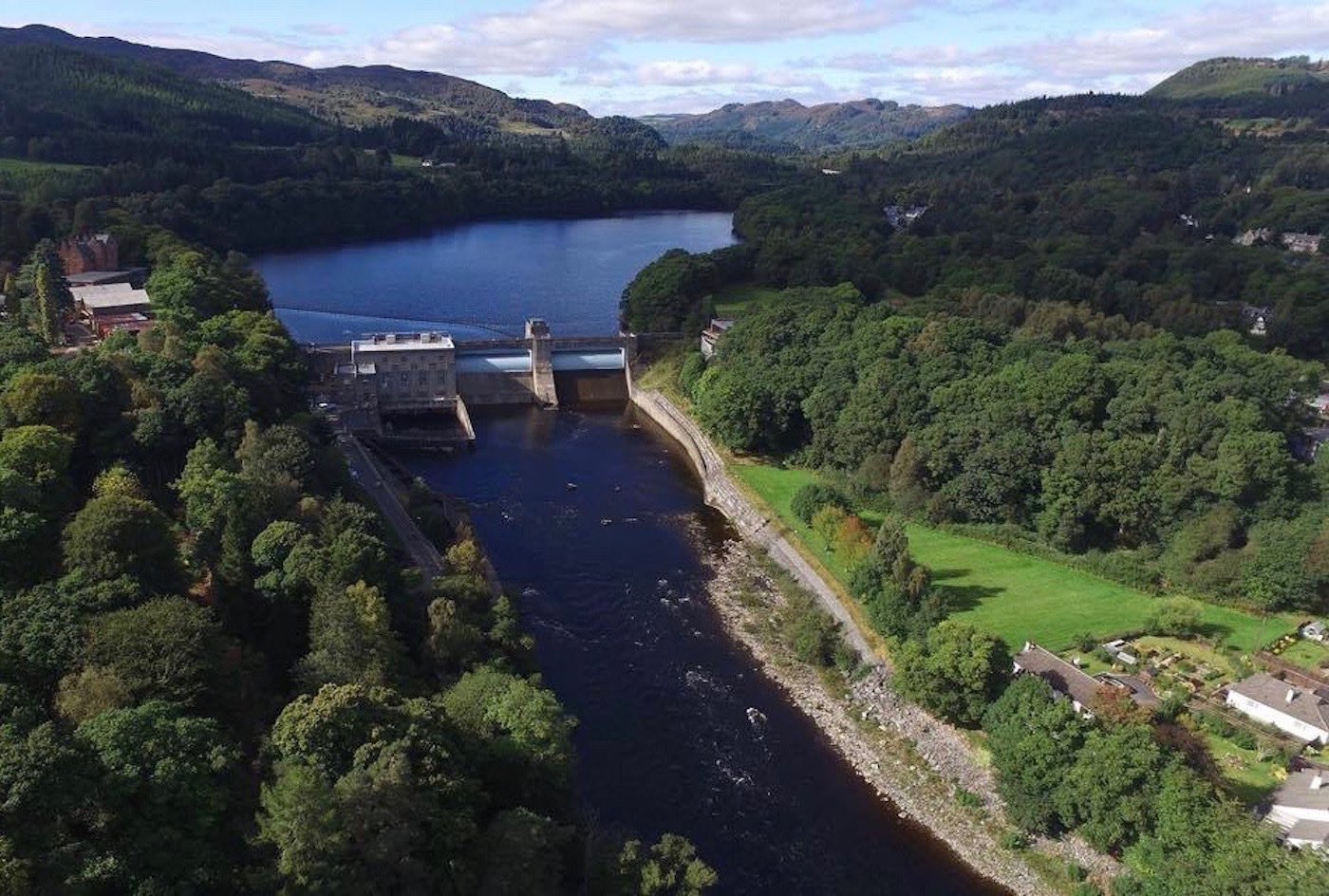
The huge hydro dam in Pitlochry was constructed in the 30's and is a colossal environmental disaster for the River Tay catchment as are all such hydro production schemes. You can see the concrete barrier which stops the entire river from replenishing the natural salmon spawning beds during high water conditions. While electricity production is important we should not be sacrificing our environment and the creatures that depend on it.
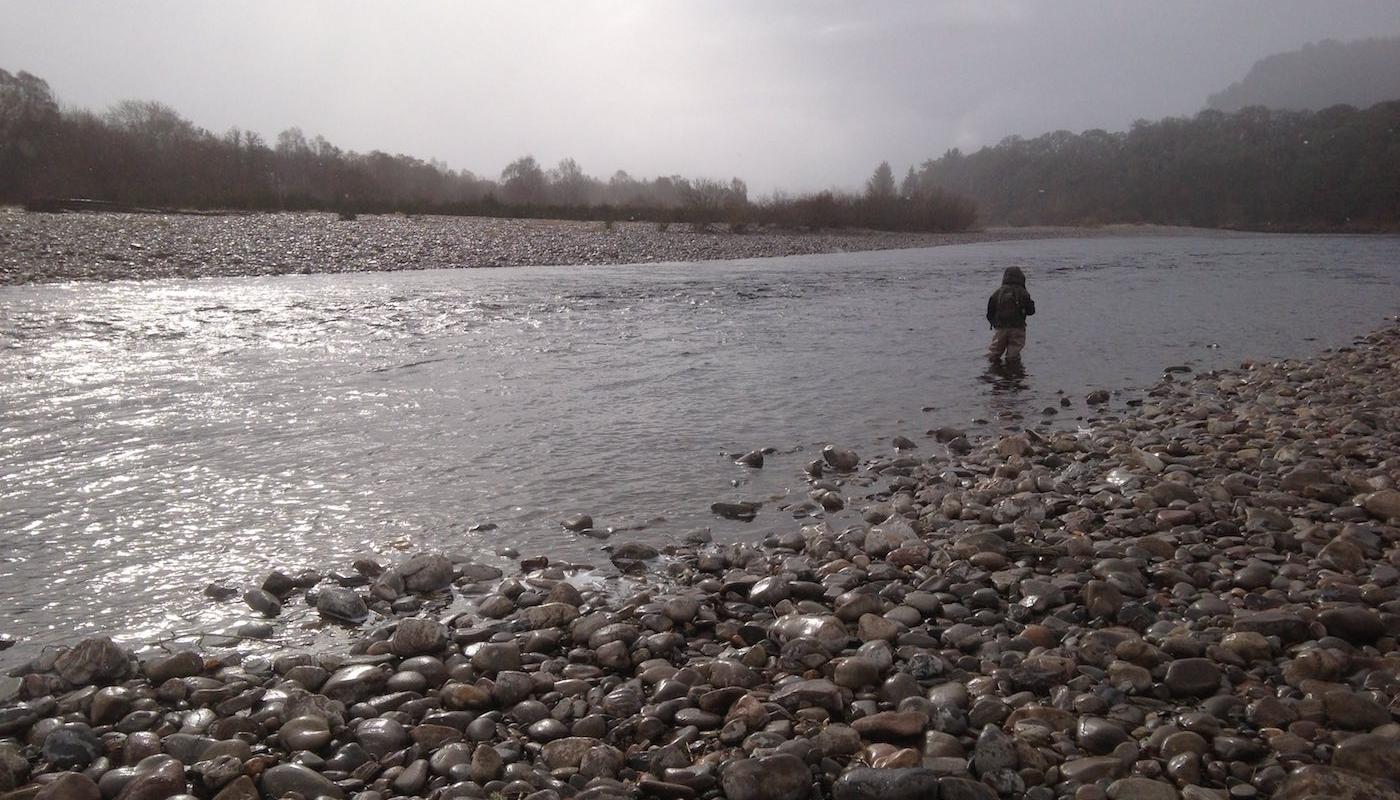
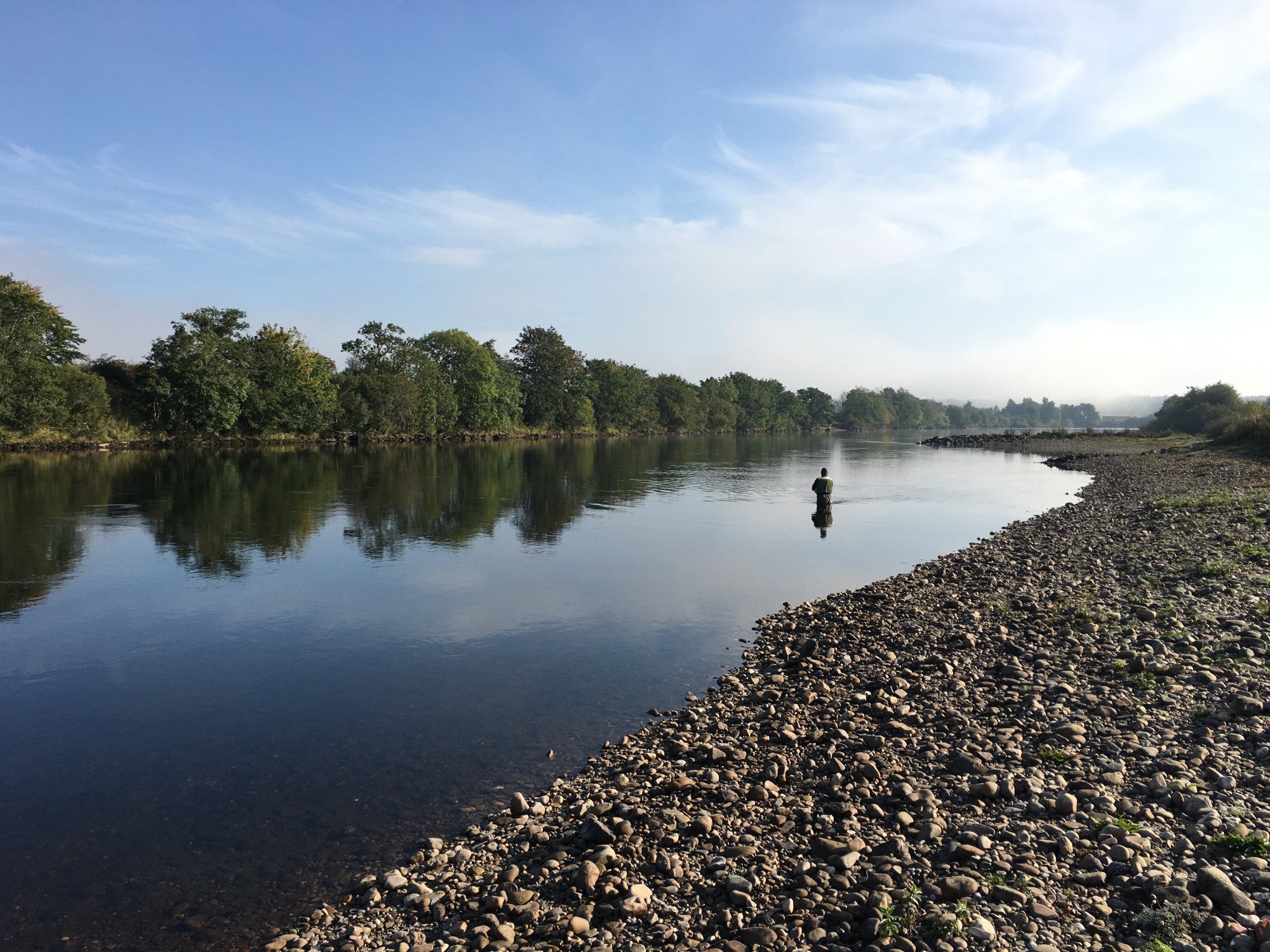
I took this shot of a salmon fly fishing angler at the Croys Pool of the Kercock salmon beat which is one of many middle River Tay hot spots. This middle area of the Tay is good for salmon fishing from March through to October and the Tay can be fished with the fly or with a spinning lure. This lovely gravel riverbank is easy to fish from unlike the far tree clad riverbank.
This is the neck of the famous Ash Tree Pool on the Lower Kinnaird salmon beat which has a lovely fly fishing stream that you can see where many salmon hold up during late Spring through to early Autumn each year. This side of the river is the easiest side to fish from and this salmon fishing trip guest was accompanied by his professional salmon guide.
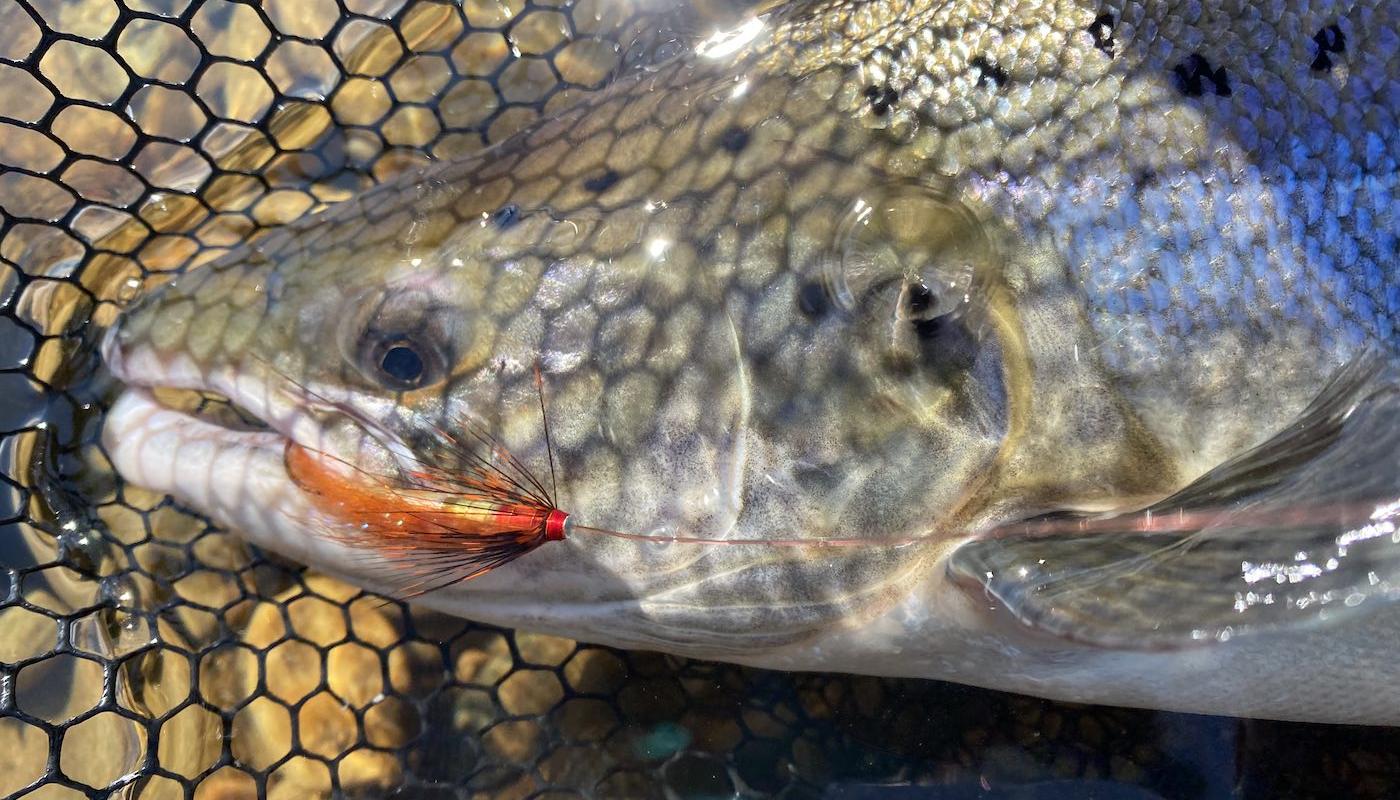
These fresh run Scottish salmon look as if they've been forged from molten silver and are often referred to as 'bars of silver'. This perfect Spring salmon took a 'Jock's Shrimp' salmon fly near the River Tummel & River Tay confluence during late May which is a great time to intercept a fish of this calibre. I took this perfect up close shot while this beautiful fish was still in the landing net before releasing it back to the river.
I can vividly recall the amazing thrill of landing this perfect fish during late May on the River Tay near Pitlochry in Highland Perthshire. Spring salmon in Scotland are always in perfect condition like you see here as this salmon lay beside my salmon fly rod and reel in the landing net before I released it back to the river.

The Atlantic Salmon

By 18th December 2025

The Atlantic salmon really is one of the world's most fascinating creatures for many reasons like the ability it has to make the transition from fresh water to sea water when nature sends it to the rich feeding grounds off the coasts of Greenland and the Faroe Isles.

At sea these fine fish pack on bodyweight over a one to four year period before the call of nature sends them back to the fresh water rivers to start their reproductive cycle all over again.

I can vividly recall the amazing thrill of landing this perfect fish during late May on the River Tay near Pitlochry in Highland Perthshire. Spring salmon in Scotland are always in perfect condition like you see here as this salmon lay beside my salmon fly rod and reel in the landing net before I released it back to the river.

The Atlantic Salmon

Salmon are widely known to return to the same stream of their birth although scientific micro tagging study research has located Scottish salmon in Norwegian rivers which means this theory is not 100% accurate. I think the best way to view this is to make a comparison with our human species and understand that genetic evolutionary gene splicing has to also naturally occur to guarantee the genetic intergity of the species and like the human race salmon also have natural exploration instincts.


These fresh run Scottish salmon look as if they've been forged from molten silver and are often referred to as 'bars of silver'. This perfect Spring salmon took a 'Jock's Shrimp' salmon fly near the River Tummel & River Tay confluence during late May which is a great time to intercept a fish of this calibre. I took this perfect up close shot while this beautiful fish was still in the landing net before releasing it back to the river.

How A Salmon Navigates

It has always amazed people as to how these fish can navigate thousands of miles to & from their oceanic feeding grounds but from what I've seen over the years here are my views. As a professional salmon guide you get to know intimately where salmon will hold up on any individual stretch of the river. On any salmon fishing venue where over head power lines cross the river you'll always find a salmon lie directly underneath the wires in addition to the beat's other natural salmon lies.

Here's an angler out fly fishing the renowned Meeting Pool on the River Tay's Upper Kinnaird salmon beat which is a perfect salmon fishing hot spot and one where many new salmon fishers are launched into the sport each year. This is the confluence of the rivers Tay & Tummel and the Tay is the river that goes up to the left hand side of frame. Look at the beautiful big riverbank oak tree to the left of frame.

Salmon Fishing Safety

The above is no doubt due to the electro magnetic field caused by live power cables which confuses the salmon's navigational sensors the same way your compass needle would spin if you walked under the same power cables. Great care however must be taken not to be casting close to these man made constructions due to the potential power surge that can arc the electrical current to a fishing rod and cause serious injury or death even when these cables are position high up off the river. The only way to fish these areas is with a long line from an upstream boat or riverbank position and never 'ever' close to the overhead wires or within the often signposted 'no fishing' areas.

I took this shot of a salmon fly fishing angler at the Croys Pool of the Kercock salmon beat which is one of many middle River Tay hot spots. This middle area of the Tay is good for salmon fishing from March through to October and the Tay can be fished with the fly or with a spinning lure. This lovely gravel riverbank is easy to fish from unlike the far tree clad riverbank.

Salmon Under Overhead Power Lines

To confirm my theory on the magnetic field that salmon use to navigate I recall power lines being re-sighted by the electricity company on one of the salmon beats I used to work on and amazingly the salmon lie moved instantly to the new power line location and no further salmon were ever seen or caught at the old location which had consistently produced salmon for decades since the wires where originally installed. This was all the hard proof I needed regarding how salmon manage to navigate to sea and back as it became clearly obvious that the magnetic field could be the only viable explanation paired with an acute sense of smell which also assists salmon to return to their natal river.

The huge hydro dam in Pitlochry was constructed in the 30's and is a colossal environmental disaster for the River Tay catchment as are all such hydro production schemes. You can see the concrete barrier which stops the entire river from replenishing the natural salmon spawning beds during high water conditions. While electricity production is important we should not be sacrificing our environment and the creatures that depend on it.

Salmon River Confluences & Dams

The acute sense of smell that salmon navigate with is also fairly obvious where you've got a tributary river merging with the main river. Sometimes the depth of the main stem of the river will be the reason salmon will congregate in the main river area adjacent to the tributary however to my mind it's likely the mixing of river scents that stops salmon as if confusing them temporarily until they decide which one to go with. In the ideal world a confluence pool with overhead power lines would be the ideal scenario for locating salmon however that could be regarded as less of a challenge the same way catching salmon immediately downstream of a major dam construction would be.


More Salmon Fishing Articles