Jock monteith Salmon Fish Scotland logo
Here's a fabulous action photograph of Jock Monteith loading up a perfect Spey cast for long range salmon fly delivery across the River Tay with his tweed jacket and chest waders on. This shot was captured on the Meetings Pool of the Lower Kinnaird Beat by top Scottish photographer Louise Bellin.
Here's Jock Monteith amidst a Spey casting lesson on the River Tay under the historic Telford Bridge demonstrating perfect D Loop loading with the single Spey cast. The traditional Spey cast is the most effective and satisfying casts. This photo was taken by local Dunkeld photographer Charlie MacDonald. Jock is wearing his Graham of Menteith tartan kilt while demonstrating Spey cast with his 15ft Monteith salmon fly rod.
Here's a salmon fishing holiday guest in the middle of a Spey casting lesson on the River Tummel. The focus was on getting a visual of the anchor point which is the mid section of the cast where the front end of the Spey line briefly touches the surface of the river before being sent across the river. Watching this anchor point touch down assists with the timing of the power stroke as any experienced salmon fly fishing instructor will know.
This River Dee salmon fly fishing trip guest came all the way from Washington in the USA to test out his brand new Spey rod. Look at the perfect parabolic action of his rod as he powers up the loading for another perfect forward delivery power stroke. This shot was taken by myself as his personal salmon fishing guide on the Invery salmon beat near Banchory in Aberdeenshire.
Here's a salmon fly fisher amidst a Spey casting lesson on the River Tummel where the focus was being put on getting a visual of the anchor point which is the mid section of the cast where the front end of the Spey line briefly touches the surface of the river before being sent across the river. Watching this anchor point touch down assists with the timing of the power stroke. Look at the lovely fast streamy water behind this fisherman which the River Tummel is famous for.
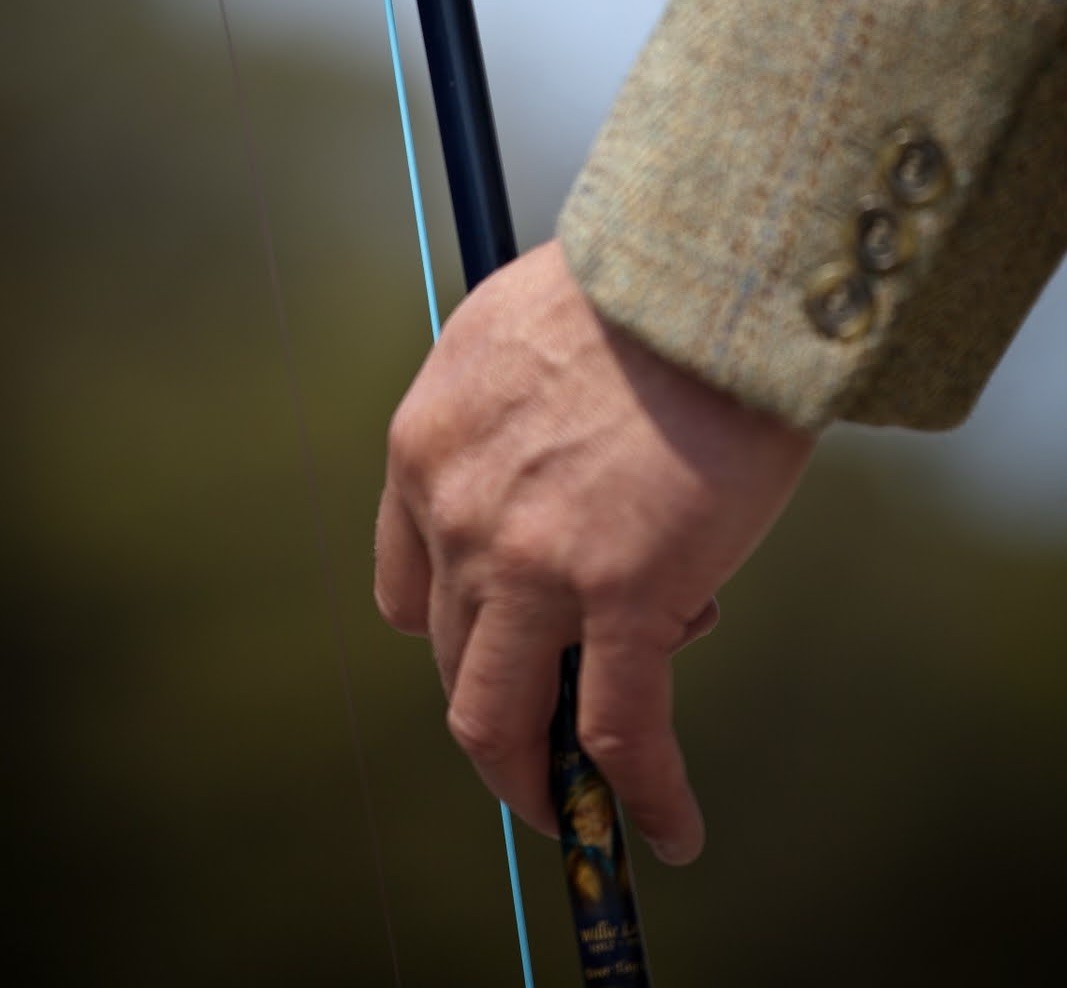
Here's a great shot of Jock Monteith's Tweed jacket and favourite Monteith salmon fly rod. The salmon fly rod was hand built by Harrisons of Liverpool and the light blue fly line was produced by Airflo in Brecon, Wales. My Tweed jackets were always made by Haggarts of Aberfeldy who used to supply all of the fishing & shooting estates in Scotland.

Watch Your Spey Casting Anchor Point

By 29th May 2026

If you take the time to study 90% of UK Spey Casters you'll see that they are only focussed on the target area when their forward power stroke is being applied and not the critical anchor point 'release' timing which is the catalyst for optimal power and salmon fly turnover.

 

Here's a great shot of Jock Monteith's Tweed jacket and favourite Monteith salmon fly rod. The salmon fly rod was hand built by Harrisons of Liverpool and the light blue fly line was produced by Airflo in Brecon, Wales. My Tweed jackets were always made by Haggarts of Aberfeldy who used to supply all of the fishing & shooting estates in Scotland.

Salmon Fly Fishing Instruction

If you're only focussed on the forward delivery target area and your sense of timing is 'expertly' acute then you'll likely get away with optimising the forward delivery energy during most casts. That category of Spey caster are however few and far between so stop Spey casting like a 'race horse with blinkers on' and pay attention to the shape, distance and timing 'off the water' at the critical anchor point moment which provides the 'pulling power' that makes the entire forward delivery possible and effortless if executed perfectly.

Here's a salmon fly fisher amidst a Spey casting lesson on the River Tummel where the focus was being put on getting a visual of the anchor point which is the mid section of the cast where the front end of the Spey line briefly touches the surface of the river before being sent across the river. Watching this anchor point touch down assists with the timing of the power stroke. Look at the lovely fast streamy water behind this fisherman which the River Tummel is famous for.

Spey Cast Anchor Point Silence

If you're Spey casting and hearing a continual 'slooshing' sound as the line lifts off the water then you've given the line too much time on the surface of the river. That 'slooshing' sound represents a loss of power stroke energy that should have gone to the fly! On the other hand if you're hearing a frequent 'wooshing' sound it means the anchor point has been missed completely or you're a millisecond too quick with the power application. A well timed anchor point release should be virtually sound free.

This River Dee salmon fly fishing trip guest came all the way from Washington in the USA to test out his brand new Spey rod. Look at the perfect parabolic action of his rod as he powers up the loading for another perfect forward delivery power stroke. This shot was taken by myself as his personal salmon fishing guide on the Invery salmon beat near Banchory in Aberdeenshire.

Study The Shape Of The Spey Cast Anchor Point

If you're fishing with one of these modern day 'talent compensator' washing lines and a stiff broom pole action rod then this is going to be a tricky thing to achieve unless you're very gentle with your lift and swing. The objective of any anchor point is to lay the front of the line down at the same angle it's to come off the water at. This logically minimises the energy loss by keeping perfect 'straight line' shape true to the intended delivery line angle instead of the line having to unravel a 'dog's breakfast' as it's lifting from the water. The true test again is 'visual' and you should be seeing a straight line ripple on the surface of the river the split second after the line has gone.

Here's a salmon fishing holiday guest in the middle of a Spey casting lesson on the River Tummel. The focus was on getting a visual of the anchor point which is the mid section of the cast where the front end of the Spey line briefly touches the surface of the river before being sent across the river. Watching this anchor point touch down assists with the timing of the power stroke as any experienced salmon fly fishing instructor will know.

Spey Cast Anchor Point Visuals

If your 'lift' has been high enough and your 'swing' smooth enough then you should be in total control of the positioning of the anchor point. For normal fishing this positioning should be approx 1 rod length from whichever shoulder you're casting off and this positioning will give you reasonable loading for the majority of casting ranges. The key to the entire deal is to tune your peripheral vision into watching not only the positioning & shape of the anchor point but the timing 'off' the water too. This will give you a consistent forward delivery casting advantage and will counteract the depth adjustments often experienced while wading down through a salmon pool and allow every forward delivery to be an absolute peach!

Here's Jock Monteith amidst a Spey casting lesson on the River Tay under the historic Telford Bridge demonstrating perfect D Loop loading with the single Spey cast. The traditional Spey cast is the most effective and satisfying casts. This photo was taken by local Dunkeld photographer Charlie MacDonald. Jock is wearing his Graham of Menteith tartan kilt while demonstrating Spey cast with his 15ft Monteith salmon fly rod.

Understanding The Speycast

Success in Speycasting is easily achieved as long as each of the 3 basic steps of the cast are fully understood along with the basic logic associated with the lift, swing & power stroke components. If you haven't taken quality instruction you'll very likely develop bad habits or miss out on understanding the little pointers that make a huge difference to the delivery ease of the cast. There's nothing more elegant & satisfying than being able to perform the Spey cast off either shoulder with 'ease & grace' so it's well worth learning. Modern day line systems although easier to cast with (if no Spey casting tuition has been undertaken) come nowhere close to an elegantly tapered Spey line for casting and actual salmon fishing 'effectiveness' via total fly control at long range which only a minority of salmon anglers understand or pay attention to these days.


More Salmon Fishing Articles